
Last updated September 10, 2026
Level 1 sweep and inspection to the NFPA 211 annual standard - flue, crown, cap, and flashing checked and photographed
Chimney sweep logs do not sweep chimneys. They loosen some creosote - which then falls where a brush and vacuum still have to collect it.
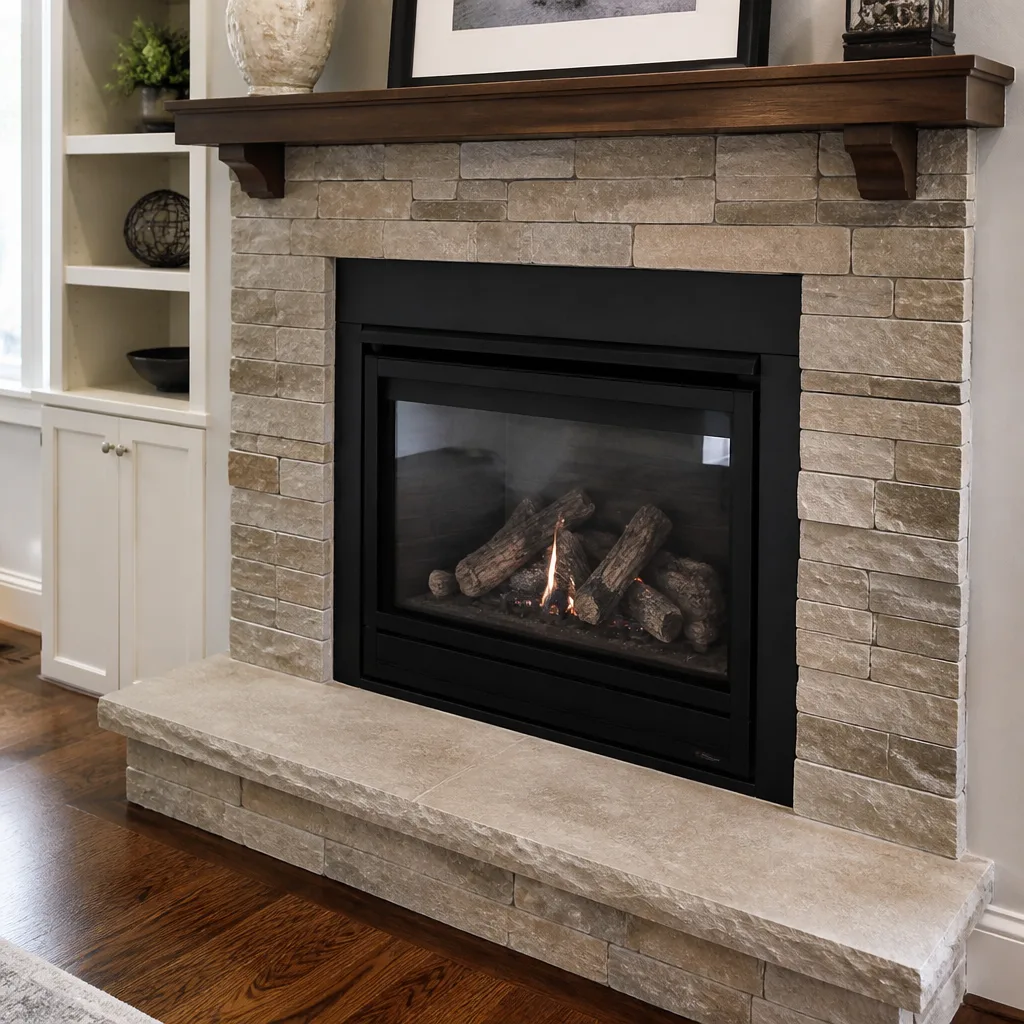
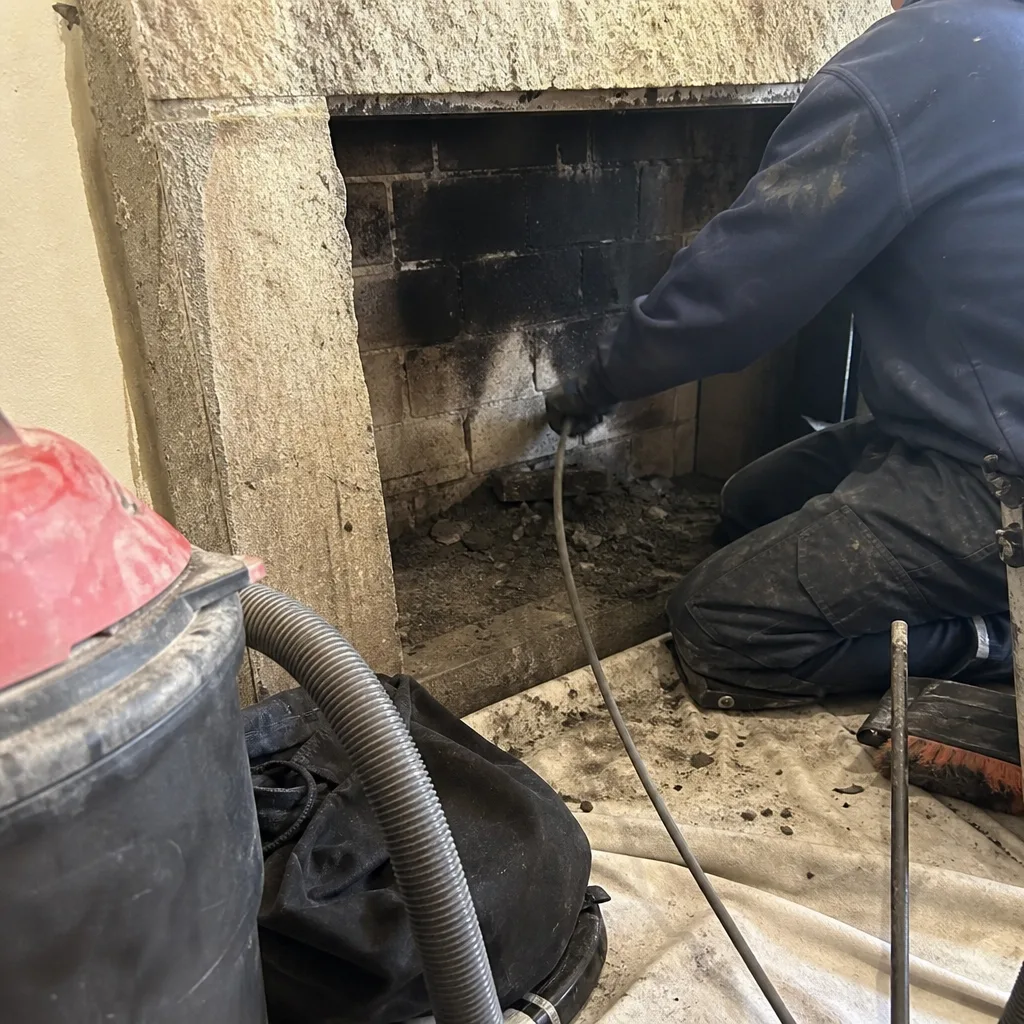 Before
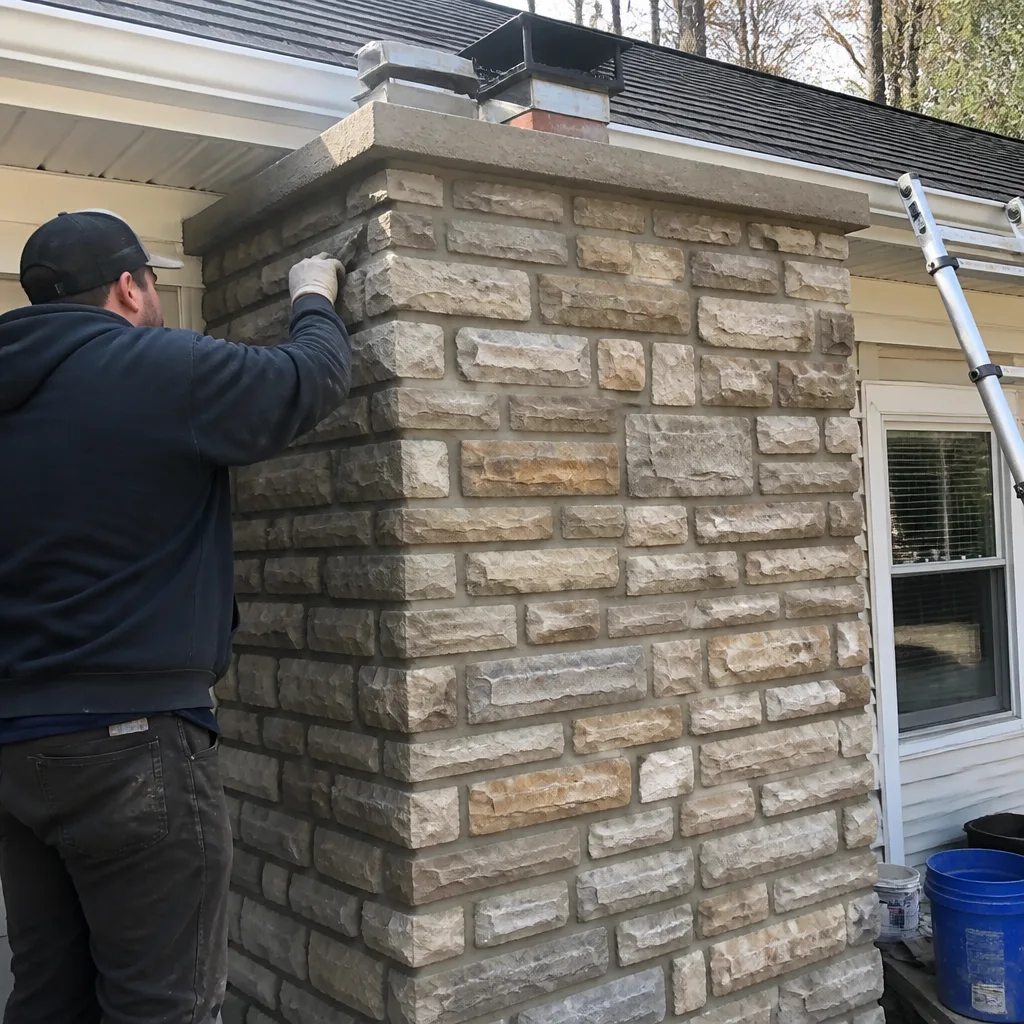 After
After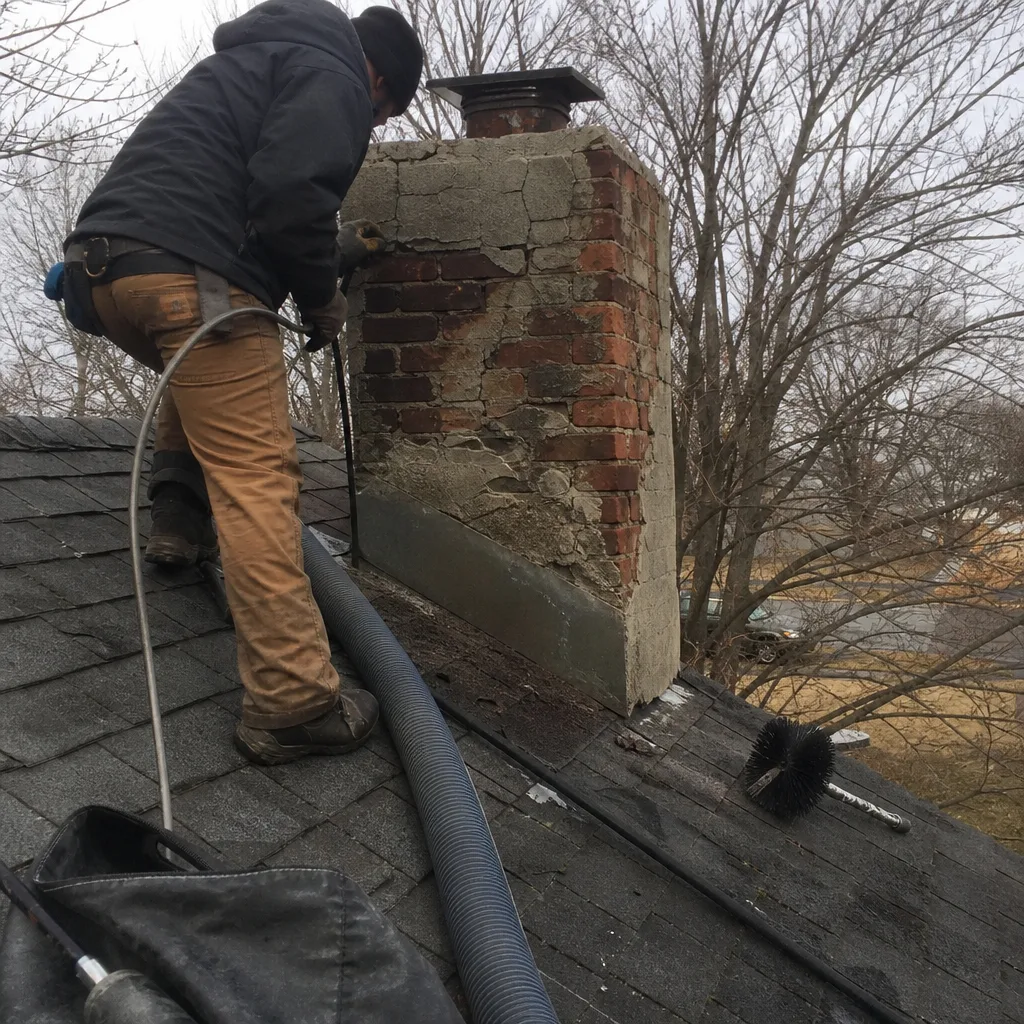 Before
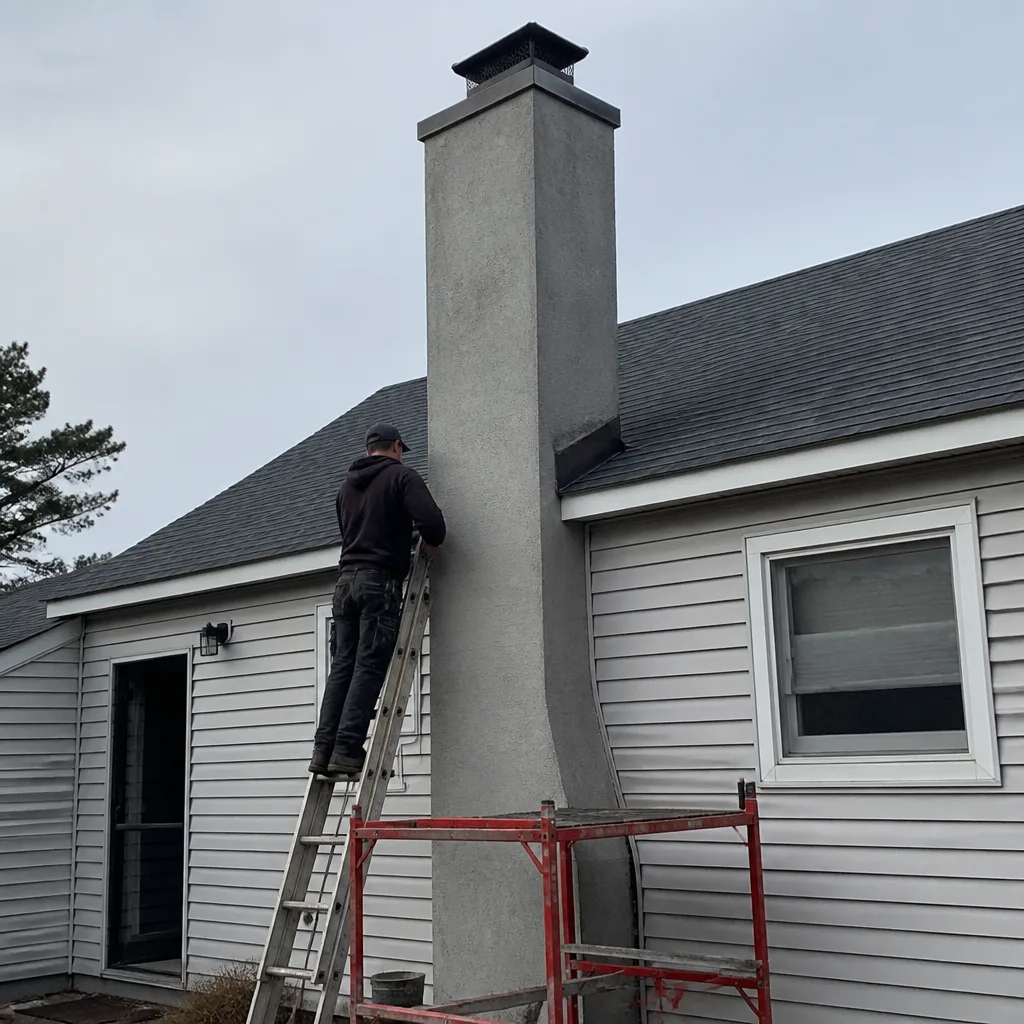 After
After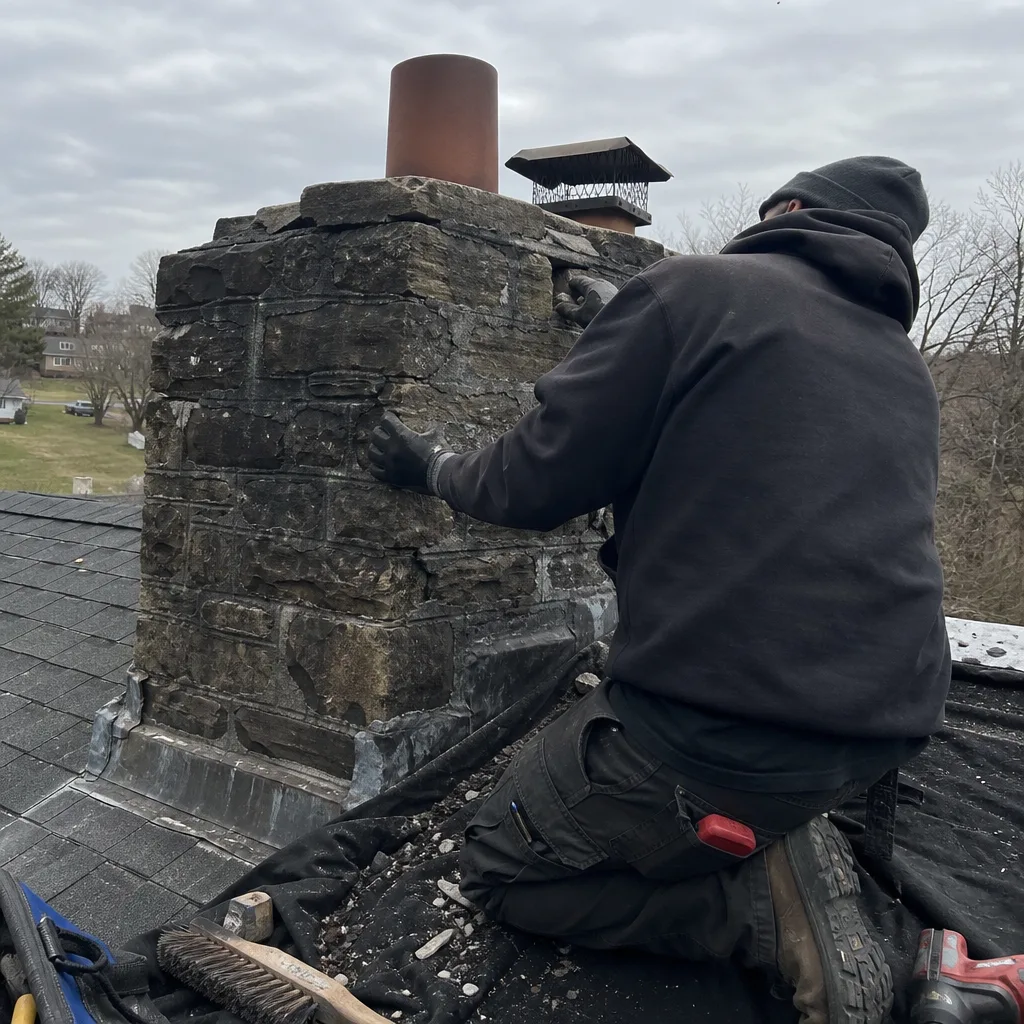 Before
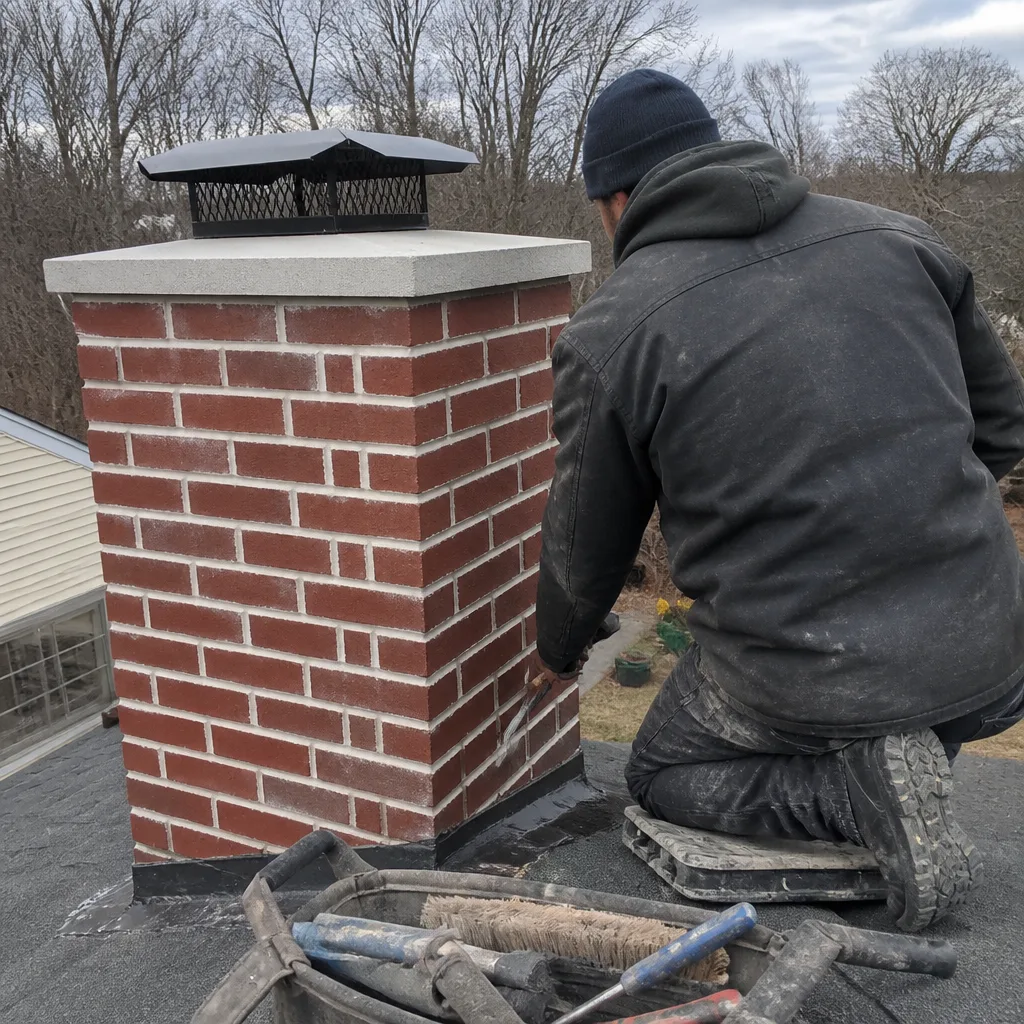 After
AfterChimney Cleaning & Sweep Maintenance Checklist for Bangor Homeowners
Most chimney maintenance checklists are written by content teams, not sweeps. They tell homeowners to “inspect the flue for obstructions” - which is physically impossible without a camera or a mirror on a 25-foot rod. In Bangor, where freeze-thaw cycles from December through March can crack a crown in a single season, bad advice does not just waste time. It creates false confidence. This guide sorts every task by the tool it actually requires: flashlight and ladder, or professional equipment and training. You will know exactly what you can check from your living room floor, what you can verify from the ground with binoculars, and what demands a credentialed technician on your roof.
Quick Answer
A complete chimney maintenance checklist for Bangor homeowners splits into two categories: ground-level checks you can perform with a flashlight, ladder, and binoculars (damper operation, firebox condition, crown and cap visible deterioration), and tasks that require a certified sweep with a Level-2 camera inspection (flue liner evaluation, smoke chamber assessment, structural integrity above the roofline). We recommend homeowners perform the ground-level checklist twice yearly - in September before burning season and in April after the final fire - and schedule our Chimney Cleaning & Sweep services annually for any wood-burning system.
Table of Contents
- Ground-Level Checks: What You Can Safely Inspect Yourself
- Roofline Observation: Using Binoculars to Spot Trouble
- Firebox and Smoke Chamber: What Abnormal Looks, Sounds, and Smells Like
- Documenting Deterioration: A Simple Year-Over-Year Log
- When the Task Requires a Professional: The Hard Line
- How to Verify Your Sweep’s Work Was Actually Done
- Bangor-Specific Risks: Climate, Codes, and Common Failures
- Seasonal Timing: When to Schedule What
Ground-Level Checks: What You Can Safely Inspect Yourself
These tasks require no special certification and carry no risk of roof fall or flue damage. They do require attention and a routine. We have walked into Bangor homes where the homeowner noticed a problem months earlier but could not describe when it started. Specific observation, recorded, beats vague memory every time.
Tools You Need
- Flashlight with fresh batteries (phone flashlight is acceptable for some tasks, but a dedicated light with a narrow beam shows cracks better)
- Step ladder tall enough to reach your damper handle
- Binoculars (8x magnification is sufficient; birding binoculars work fine)
- Phone camera
- Notebook or simple phone note
Checklist: Firebox Opening
- Inspect refractory panels or firebrick for cracks wider than a nickel. Hairline cracks are normal; gaps that admit light through to the outside are not. In Bangor, where many homes were built between 1890 and 1940 with original masonry, we see heat-damaged mortar that has receded half an inch or more. Note the location and photograph.
- Check for white or tan powdery deposits (efflorescence) on interior surfaces. This indicates moisture migration through the masonry. It is not cosmetic. It means water is finding a path from outside to inside, and that path will widen with each freeze-thaw cycle.
- Verify the damper opens fully and seats closed without grinding. A damper that sticks or squeals may have creosote buildup on the hinge, or it may be warped from over-firing. Open it, close it, listen. A smooth operation sounds like a heavy door latching. Grinding or catching means something is wrong.
- Shine your flashlight up the smoke chamber. You are looking for black, glossy deposits (stage two or three creosote, which is combustible) or any visible gaps where smoke could leak into surrounding structure. You cannot see the flue liner from here in most systems, but you can see whether the chamber walls are coated with thick, shiny buildup.
Record the date and what you found. If the damper operated smoothly last September and sticks this September, that is a trend. Trends matter more than single observations.
Checklist: Exterior From Ground Level
- Walk the perimeter and look for missing or spalled bricks on the chimney stack
- Note any vegetation growing from mortar joints - roots wedge and widen cracks
- Check that the cleanout door (if present) sits flush and is not rusted through
- Verify that the chimney extends at least two feet above any point of the roof within ten feet (this is code, and it affects draft)
Roofline Observation: Using Binoculars to Spot Trouble
You do not need to climb your roof to see most crown, cap, and chase cover failures. In Bangor, where snow loads can exceed 30 pounds per square foot and ice dams form reliably along north-facing eaves, the top of your chimney takes abuse that is visible from your driveway with decent binoculars.
What to Look For: Crown Condition
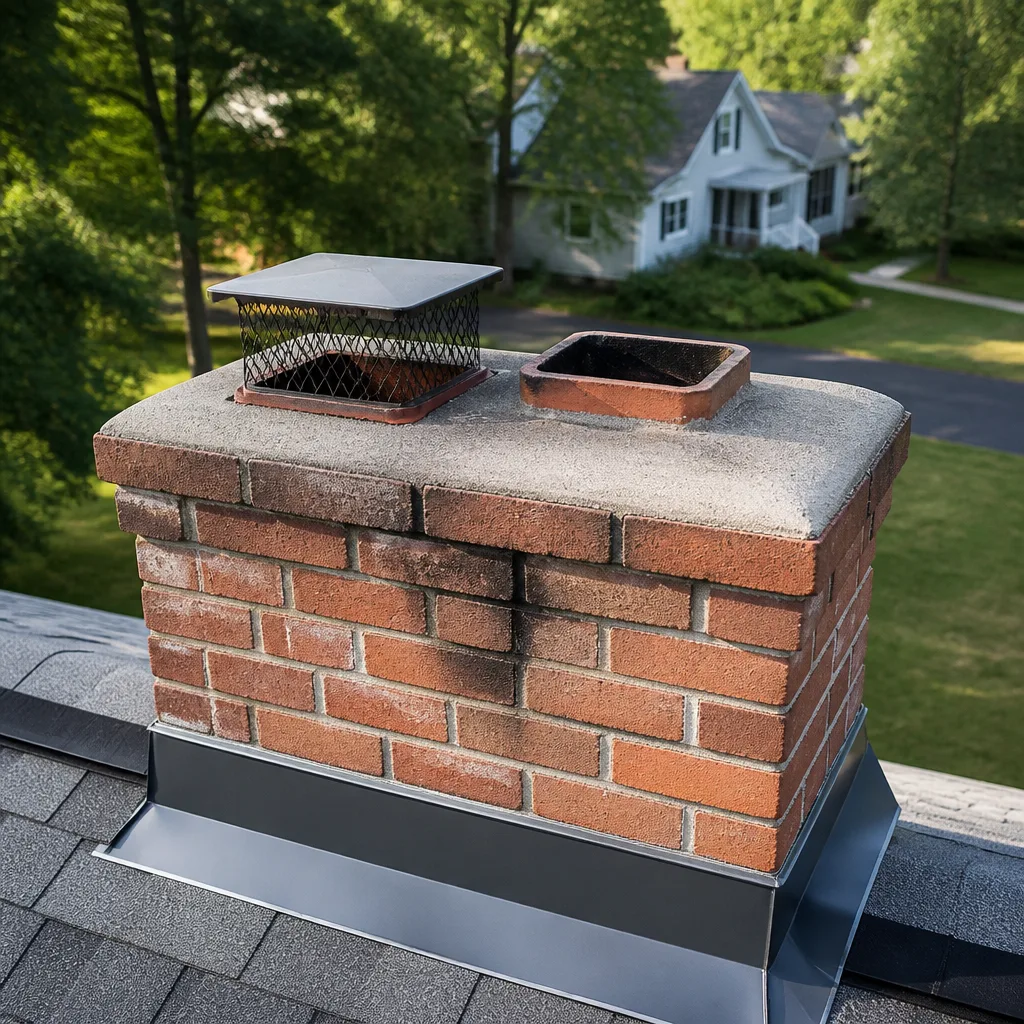
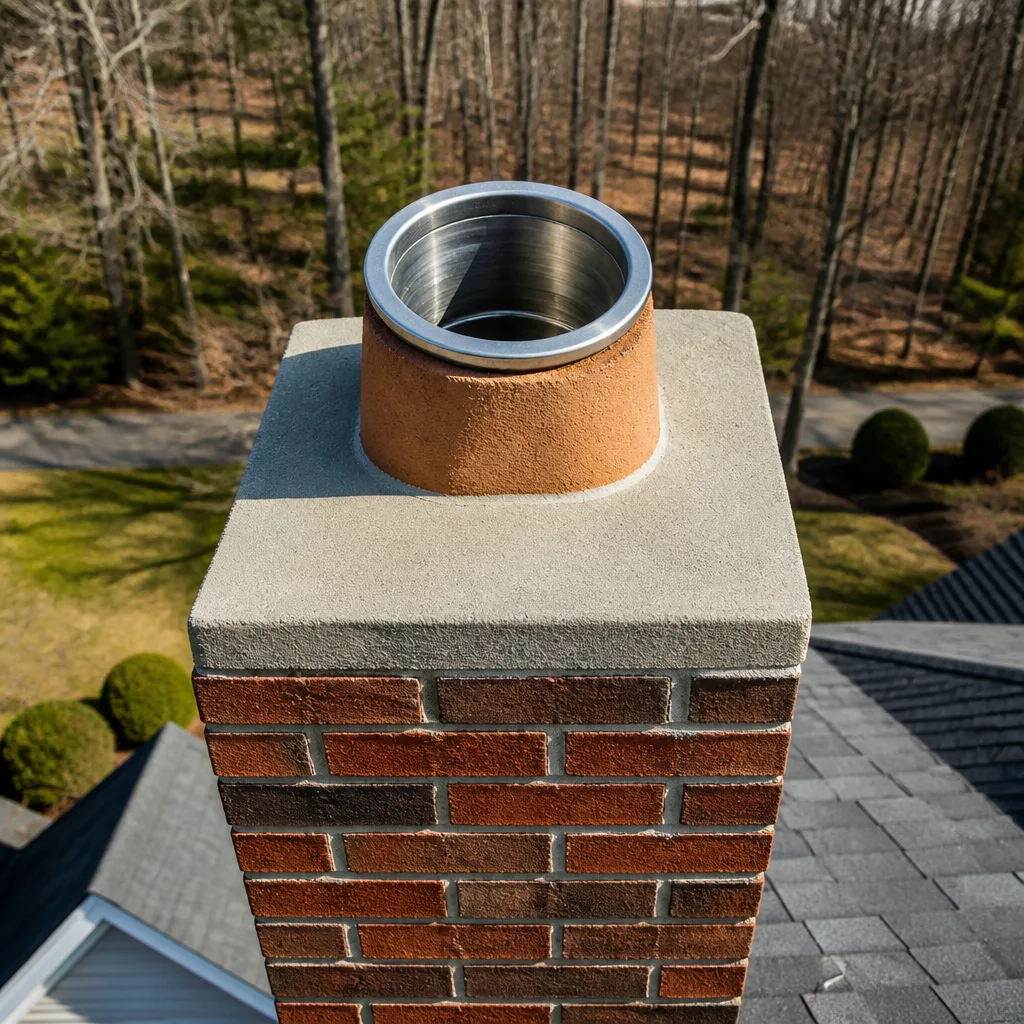
The crown is the concrete or mortar slab that tops a masonry chimney, sloped to shed water. It is not the same as the cap, which is metal and sits above the flue opening. Crowns fail predictably in our climate.
- Hairline cracks running from flue edge to crown edge. These will widen. Water enters, freezes, and pries the crown apart. We replace crowns in Bangor every spring that were intact in October.
- Chunks missing or edges crumbling. This exposes the brick courses beneath to direct water intrusion.
- Pooling or discoloration indicating the crown is not shedding water. A properly sloped crown dries uniformly after rain. Dark patches that persist mean low spots.
What to Look For: Cap and Chase Cover
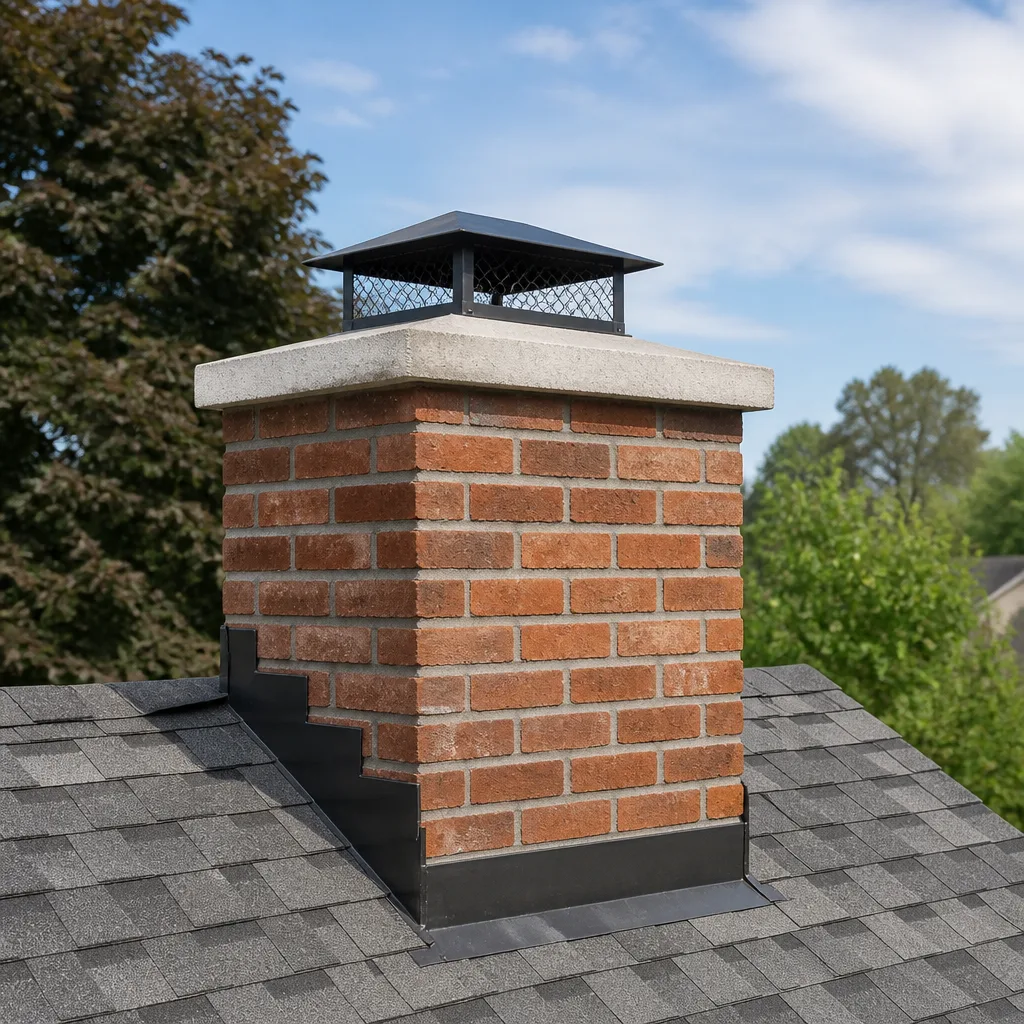
Factory-built chimneys use chase covers - metal tops that shed water past the flue pipe. We see rusted chase covers in Bangor neighborhoods like Roseto and East Bangor where homes from the 1970s and 1980s still carry original galvanized steel that has reached end of life.
- Staining or rust streaks down the chase siding. This means water is getting past the cover and running down the interior.
- Visible gaps between the flue pipe and the chase cover collar. Gaps admit rain and, in summer, nesting animals.
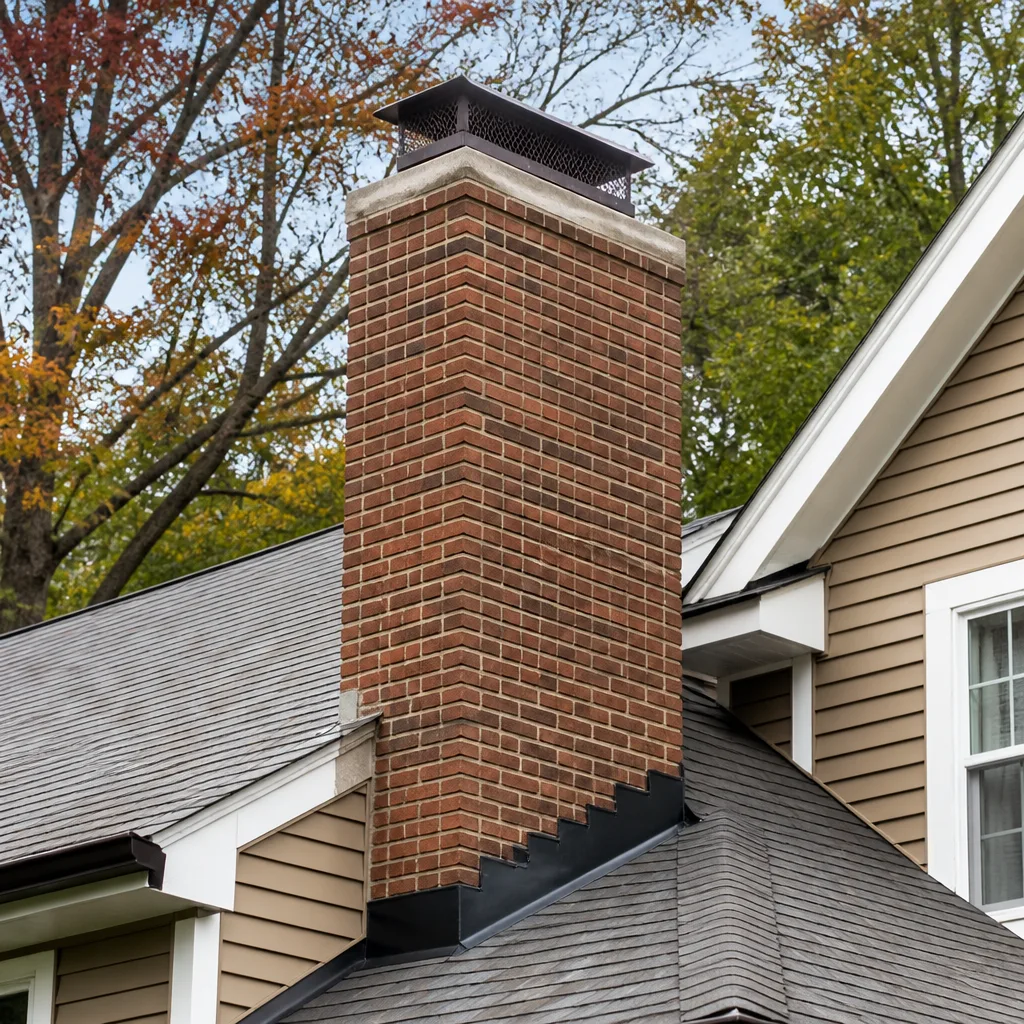
- Missing or damaged mesh screening on the cap. The mesh keeps animals out while allowing smoke to vent. A cap with no mesh is a cap that will eventually host a squirrel family.
If you observe any of these conditions, photograph them with your phone through the binoculars (brace against a car or fence post for stability). The photo becomes documentation for your sweep and, if needed, for insurance.
Firebox and Smoke Chamber: What Abnormal Looks, Sounds, and Smells Like
The smoke chamber is the inverted funnel above the damper that channels smoke into the flue. It is the most under-inspected component in most chimneys because it is awkward to reach and unpleasant to examine. But it is where many chimney fires begin, and where carbon monoxide can leak into living space if the chamber walls are breached.
What You Can Check Without Tools
With the damper fully open and a strong flashlight aimed upward, you can see the chamber walls from the firebox floor. You cannot see the full flue, but you can see enough to identify problems that demand professional attention.
- Normal: Sooty black coating, matte finish, uniform thickness. Some roughness from parging (the mortar coating applied during construction) is expected.
- Abnormal - creosote glazing: Shiny, tar-like, black or brown deposits that look like they would be sticky to touch. This is stage two or three creosote. It ignites at lower temperatures than raw wood and burns intensely. If you see glaze, do not burn until a sweep removes it.
- Abnormal - parging loss: Exposed brick or gaps where the smoke chamber coating has fallen away. This creates turbulence that reduces draft and can allow smoke to leak through mortar joints.
- Abnormal - staining patterns: Brown or yellow streaks that do not match the general soot pattern. These indicate water intrusion or, in some cases, previous chimney fire damage that has baked deposits onto the surface.
What You Can Hear
During a fire, listen from the firebox opening with the damper open. A proper draft produces a steady, low roar with occasional crackling from the wood. Whistling, pulsing, or irregular surging suggests blockage, improper flue sizing, or negative pressure in the house. In Bangor’s older homes with updated windows and weatherstripping, we frequently find that airtight construction has reversed draft patterns that worked fine for decades.
What You Can Smell
A clean chimney smells like nothing when not in use. A musty, campfire-ash odor on humid days indicates creosote absorption of atmospheric moisture - the deposits are thick enough to act like a sponge. A sharp, acrid smell during burning suggests incomplete combustion or a flue that is too cold to establish proper draft. Both conditions warrant professional inspection.
Documenting Deterioration: A Simple Year-Over-Year Log
The most useful thing you can bring to a sweep appointment is not a vague memory of “it looked fine last year.” It is dated photographs and brief notes that establish rate of change. A crack that widened from hairline to pencil-width in one year is an emergency. The same crack held steady for five years is monitoring.
The Log Format
We recommend a simple structure that takes five minutes per inspection and creates value for both you and any professional you hire.
- Date and weather conditions. Temperature and recent precipitation affect what you observe. A damp day makes efflorescence more visible; a cold day makes damper operation stiffer.
- Photograph the firebox from the same position each time. Stand at the hearth edge, kneel, aim flashlight up. The repeatability matters more than the artistry.
- Photograph the crown from the same ground position. Pick a landmark - the corner of your garage, a fence post - and frame the chimney top identically.
- Note operational changes. “Damper sticks in cold weather,” “Smoke rolls out on light-off when wind from northeast,” “Odor noticeable after rain.” Specifics, not general complaints.
- Record fuel and burning habits. If you switched from oak to pine, or started using manufactured logs, note it. Fuel changes alter creosote accumulation rates dramatically.
Bring this log to your sweep appointment. A technician who sees documented change over time can focus inspection where it matters rather than performing a generic scan. At Chimney Cleaning & Sweep in Bangor, we review homeowner logs before we unload equipment. It saves time and improves accuracy.
When the Task Requires a Professional: The Hard Line
Some tasks are not merely difficult for homeowners. They are dangerous, or they require interpretation that comes only with training and equipment. This section draws the line precisely. If a task is listed here, do not attempt it yourself. The cost of professional service is minor compared to the cost of a chimney fire, structural collapse, or fall from a roof.
Tasks Requiring a Certified Sweep
- Flue liner inspection with a camera. The flue is not visible from the firebox in most systems, and even when it is, surface appearance deceives. A stainless steel liner can look intact while separated from the wall at the top. Only a camera on a flexible rod, operated by someone who knows what cracking, spalling, and joint separation look like, produces a valid assessment. Our Level-2 inspections use camera systems that document every foot of flue with photographs you receive.
- Smoke chamber parging repair. The materials (refractory mortar, specifically) and the application technique (sprayed or troweled in confined space) require training. Incorrect parging can obstruct the flue opening or create new ledges where creosote accumulates.
- Crown repair or replacement. Proper crown construction requires forms, reinforcement, and a pour that achieves minimum thickness at the edges (two inches) with proper slope. Patch jobs with caulk or standard mortar fail within one season in Bangor’s climate.
- Chase cover or cap installation on steep roofs. We do not recommend homeowners access roofs with pitch greater than 4:12. Most Bangor homes built before 1950 have pitches of 8:12 or steeper. Falls from these heights produce serious injury.
- Any work involving the combustion appliance itself. Gas log sets, fireplace inserts, and wood stoves connect to fuel lines, electrical systems, and venting that must meet manufacturer clearance requirements. Improper installation voids insurance and creates fire or carbon monoxide hazards.
The Safety Caveat: Springs, Heights, and Fuel Systems
Chimney work involves genuine hazards. High-tension components like spring-loaded damper mechanisms can cause injury if released improperly. Roof work at height on steep pitches is a leading cause of homeowner injury during maintenance attempts. Gas line connections, if disturbed, can leak undetected until ignition. We have responded to emergency calls in Bangor where a well-intentioned homeowner’s inspection created the problem we were called to fix. The boundary is not about capability. It about risk management and the tools required to do the work correctly.
For any of these tasks, Hearthstone Chimney Co. home provides Level-2 camera inspections, documented with photographs and plain-English verdicts. We use professional-grade materials from brands like Olympia Chimney and DuraFlex for liner and venting work, and we back every job with our 90-Day Done Right Promise in writing.
How to Verify Your Sweep’s Work Was Actually Done
Not every company that advertises chimney sweeping performs complete work. We have been called to inspect chimneys that were “swept” the previous season yet contained enough creosote to support a significant chimney fire. This section gives you a post-visit checklist to confirm you received what you paid for.
What Clean Looks Like
- Firebox: Ash and loose debris removed; refractory surfaces visible, not coated with fresh soot from the sweeping process itself
- Smoke chamber: Soot layer reduced to thin, matte coating; no heavy deposits remaining on walls or shelf
- Damper: Operates freely; hinge and track free of creosote buildup that would cause binding
- Flue: You cannot see this yourself, but the inspection report should include camera images showing liner surface with deposits removed or reduced to acceptable levels
What a Valid Inspection Report Contains
- Dated photographs of accessible components. Not stock images. Your actual chimney, with identifying features visible.
- Written condition assessment for each major component: firebox, smoke chamber, damper, flue liner, crown, cap, exterior masonry.
- Clear statement of recommended actions with priority ranking. “Monitor” versus “repair before next burning season” versus “do not use until repaired.”
- Measurement data where relevant: crack widths, creosote thickness readings, flue dimensions.
- Technician name and certification number. CSIA certification is the industry standard; NFI certification indicates additional training for gas systems.
What Your Receipt Should Itemize
Vague invoices - “chimney service, $299” - protect the company, not you. Itemization proves what was performed and supports warranty claims. At Hearthstone Chimney Co., our invoices list: service type (sweep, inspection level, repair description), materials used (including brand names like Famco or Copperfield where applicable), labor hours, and any recommendations with associated quotes. No surprises on the bill. A square deal, documented.
Bangor-Specific Risks: Climate, Codes, and Common Failures
Bangor sits in the Lehigh Valley’s northern reach, where elevation and valley geography create weather patterns distinct from Philadelphia or even Allentown. Your chimney faces conditions that shape maintenance needs in specific ways.
Freeze-Thaw Cycling
The average Bangor winter brings 30 to 40 freeze-thaw cycles - days above 32°F followed by nights below. Each cycle, water in masonry pores expands about 9 percent. Over a season, this progressively destroys mortar and brick faces. We see the most accelerated damage in chimneys on north-facing exposures where snow and ice persist longest. In neighborhoods like Bangor Heights and the older sections along Broadway, original 1920s brick with lime-based mortar is particularly vulnerable. Annual inspection catches spalling before it compromises structural integrity.
Pennsylvania Code and Local Enforcement
Pennsylvania adopted the 2018 International Residential Code with state amendments, which governs chimney construction, clearances, and liner requirements. Bangor Borough enforces these provisions through building permits for new construction and liner replacements. A professional sweep should know whether your system was built to current code or predates it, and what grandfathering applies. We encounter unlined chimneys in Bangor homes built before 1940 that are legal to use if intact but illegal to modify without full liner installation. This distinction matters for insurance and resale.
Common Fuel and Burning Patterns
Bangor’s housing stock mixes original coal-converted fireplaces, 1970s prefabricated wood-burning units, and modern gas inserts. Each requires different maintenance frequencies and techniques. Wood-burning systems in continuous use need annual sweeping; gas systems need inspection of log set placement, burner orifices, and venting connections. We have found improperly converted coal flues - still unlined, still oversized for wood - that accumulated creosote at dangerous rates because the previous owner never disclosed the conversion.
Local Wildlife Patterns
Raccoons, squirrels, and chimney swifts are active in Bangor’s wooded margins. A cap with intact mesh is essential. We remove nests every spring from uncapped chimneys in the areas near Bangor Park and the Martins Creek corridor. A nest can block a flue partially or completely, causing smoke backup or carbon monoxide intrusion. The mesh on a quality cap from Copperfield or Famco prevents entry while maintaining proper draft.
Seasonal Timing: When to Schedule What
Maintenance timing in Bangor is driven by climate and by sweep availability. The September rush is real, and homeowners who wait until the first cold night often face two-week delays. Plan backward from your first fire.
September: Pre-Season Professional Inspection
Schedule your annual Level-2 inspection and sweep by mid-September. This allows time for any needed repairs before burning season. Our schedule at Chimney Repair in Bangor fills by late September most years; calling in August secures your preferred date.
September: Homeowner Ground-Level Checklist
Perform the firebox, damper, and exterior observation checklist the same weekend you schedule professional service. Your notes inform the sweep’s inspection and ensure you enter the season with full documentation.
October Through March: Operational Monitoring
During burning season, maintain the log format described earlier. Note any changes in draft, odor, or operation. Do not attempt mid-season cleaning yourself. If you suspect dangerous creosote buildup, discontinue use and call for inspection.
April: Post-Season Assessment
After your final fire, perform the ground-level checklist again. Compare to September’s baseline. Spring is also the ideal time for crown repair, chase cover replacement, and masonry work - materials cure better in moderate temperatures, and sweeps have more scheduling flexibility.
May Through August: Deferred Maintenance Window
Major repairs scheduled during off-season often complete faster and at lower urgency premium. If your September inspection identified crown cracking or liner deterioration that was safe to monitor through the season, spring is when to address it.
Common Mistakes to Avoid
- Assuming a clean firebox means a clean flue. The firebox is the easiest part to clean and the most visible. Heavy creosote hides in the flue where you cannot see it. We have inspected chimneys with pristine fireboxes and flues near ignition stage.
- Using the wrong fuel to “clean” the chimney. Manufactured logs marketed as creosote removers reduce buildup marginally at best and can damage factory-built systems. They do not replace professional sweeping.
- Ignoring the damper after it sticks once. A damper that requires extra force this season will likely seize entirely next season. The repair is simple when caught early; replacement is required if the mechanism warps or breaks.
- Climbing the roof to “get a better look.” In Bangor, where many roofs are steep and original slate or aging asphalt shingles are slick with moss, this is how homeowners get injured. Binoculars from the ground, or a professional with proper fall protection, are the correct tools.
- Accepting a sweep appointment without verifying certification. Pennsylvania does not license chimney sweeps at the state level. CSIA and NFI certifications are voluntary and indicate verified training. Ask for certification numbers and verify them online.
- Delaying repair because “it still works.” A chimney with a cracked liner or deteriorated crown functions until it does not. The failure mode is often a chimney fire or carbon monoxide event, not gradual decline. We have rebuilt chimneys in Bangor that could have been repaired for one-fifth the cost if addressed two seasons earlier.
When to Call a Professional
Call a certified sweep immediately if you observe any of the following: visible creosote glazing in the smoke chamber, cracks in the flue liner (visible on camera inspection), crown damage with exposed brick beneath, water intrusion stains on interior walls adjacent to the chimney, smoke rollout during fire start-up, or any odor of gas when the fireplace is not in use. These conditions do not improve with time and can create fire or health hazards.
Hearthstone Chimney Co. offers free estimates in Bangor. A live person answers our phones 24 hours a day, 7 days a week - not a voicemail, not a callback queue. Our background-checked, uniformed technicians complete most jobs in a single visit, and we provide no-hassle upfront pricing so the number on the estimate is the number on the invoice. Every inspection includes photographs you can see and a plain-English verdict. Call (610) 609-7634 to schedule.
Frequently Asked Questions
A standard Level-1 sweep and inspection for a wood-burning fireplace in Bangor typically runs $150-$250; a Level-2 inspection with camera evaluation of the flue liner runs $250-$400 depending on accessibility and number of flues. Gas fireplace inspections are generally $100-$175. We provide exact quotes before booking, and our $89 Seasonal Tune-Up offer covers basic inspection and maintenance for qualifying systems. Call (610) 609-7634 for a free estimate.
The National Fire Protection Association Standard 211 recommends annual inspection for all chimneys, fireplaces, and vents, and sweeping as needed based on deposit accumulation. For wood-burning systems in regular use, that typically means annual sweeping. In Bangor, where many homeowners burn hardwoods like oak and maple from late October through March, we find annual service is necessary to keep creosote within safe limits. Gas systems need annual inspection but may not require sweeping if properly tuned.
You need a new liner if your existing liner is cracked, separated, or missing; if your chimney was built unlined and is being used for solid fuel; or if you are installing a new appliance that requires a specific venting category. We do not recommend liner replacement without camera evidence you can see yourself. In our experience, about 30 percent of “liner replacement” recommendations we review from other companies are unnecessary or premature. Our free second opinion on any written estimate gives you that verification.
Skipped maintenance leads to creosote accumulation that can ignite in a chimney fire (temperatures exceeding 2,000°F), liner deterioration that allows heat transfer to combustible framing, and blockages that force carbon monoxide into living space. In Bangor’s older housing stock with balloon framing, a chimney fire can spread rapidly through wall cavities. The risk is not theoretical - we respond to preventable chimney fires every winter. The cost of annual service is minor compared to the cost of structural fire restoration or medical treatment for CO exposure.
You can remove superficial ash and debris from the firebox, and you can operate a chimney brush from the top or bottom if you have the correct diameter brush, extension rods, and safe roof access. However, you cannot inspect the flue liner condition without a camera, you cannot assess smoke chamber integrity from below, and you cannot evaluate structural conditions at height. We do not recommend DIY sweeping for systems in regular use. The savings are modest and the risks of incomplete cleaning or undetected damage are substantial.
A Level-1 inspection includes visual examination of readily accessible portions of the chimney exterior, interior, and connecting appliance. A Level-2 inspection, which we recommend for property transfers, after chimney fires, or when changing appliance type, adds camera inspection of the flue liner, attic and crawl space examination for proper clearances, and inspection of the chimney exterior from roof level. Our Level-2 inspections conclude with dated photographs, written condition assessment, prioritized recommendations, and an itemized quote for any needed work.
The Bottom Line
Effective chimney maintenance in Bangor requires knowing what you can do and what belongs to a trained professional. For a deeper dive, read The Complete Guide to Chimney Cleaning in Bangor. Perform your ground-level checks twice yearly with a flashlight, ladder, and binoculars. Document what you find with dated photographs and brief notes. Schedule professional Level-2 inspection annually, ideally in September before the burning season begins. Verify your sweep’s work with the post-visit checklist: clean surfaces, detailed report, itemized invoice. And never climb a steep roof or attempt flue repair yourself - the tools and training matter, and the hazards are real.
Done right - and we stand behind it. That is how Hearthstone Chimney Co. has operated for over 42 years, and how we intend to serve Bangor for decades to come.
Written by Russell Haines, Owner at Hearthstone Chimney Co., serving Bangor since 2014.