
Last updated September 10, 2026
Level 1 sweep and inspection to the NFPA 211 annual standard - flue, crown, cap, and flashing checked and photographed
Chimney sweep logs do not sweep chimneys. They loosen some creosote - which then falls where a brush and vacuum still have to collect it.
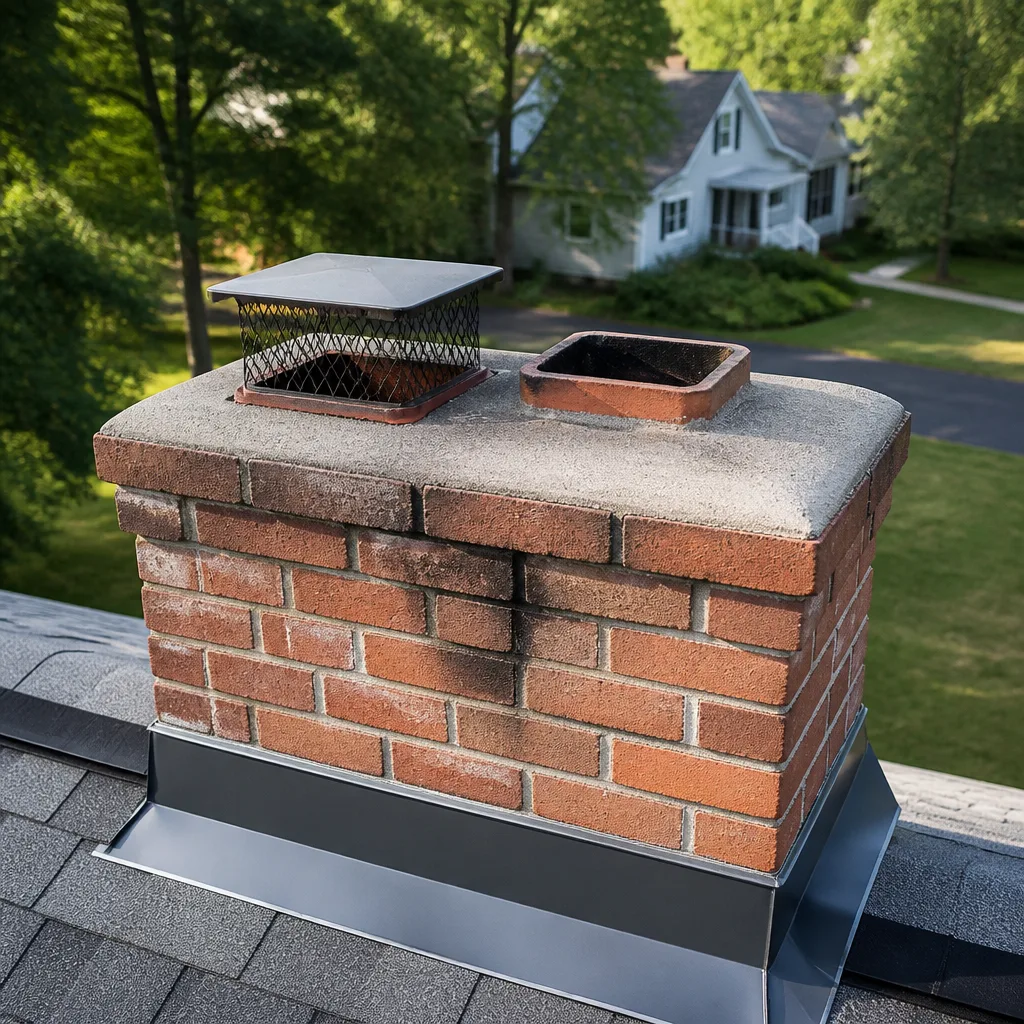
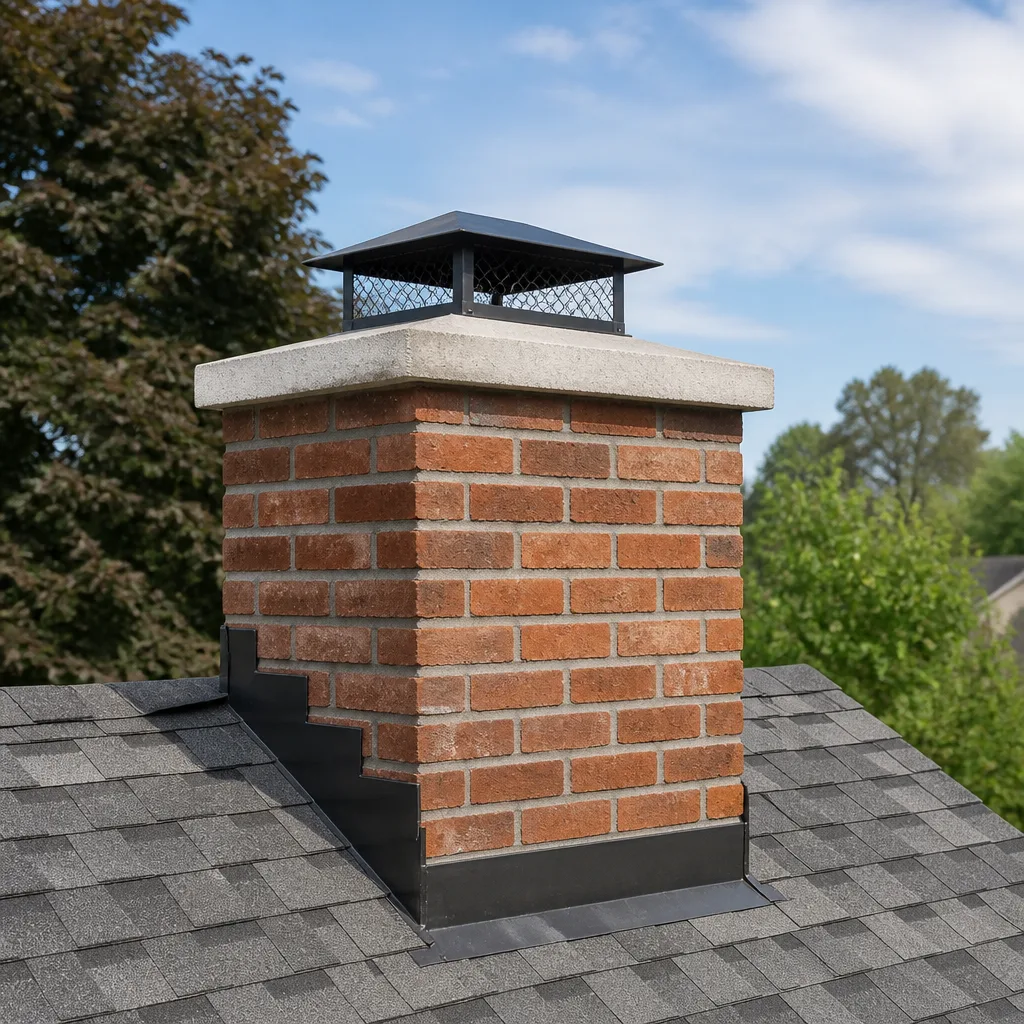
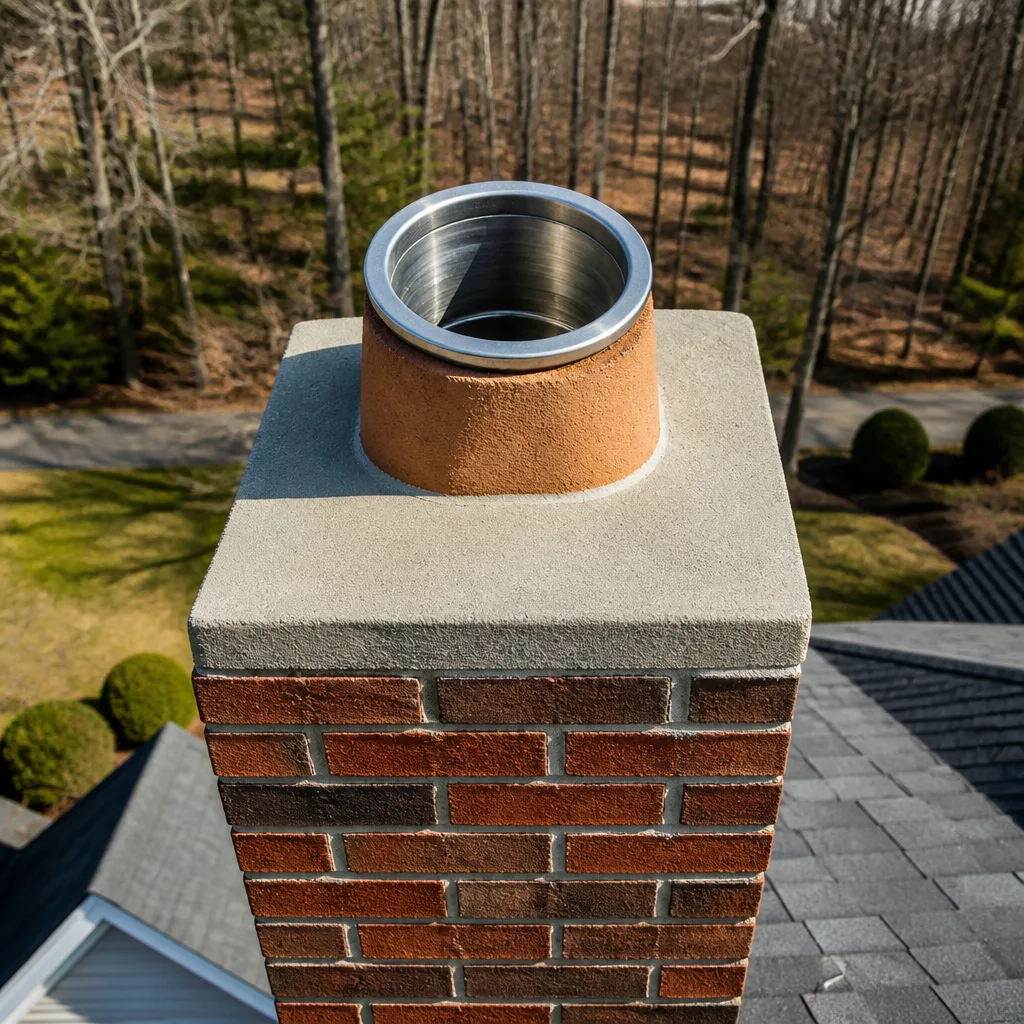
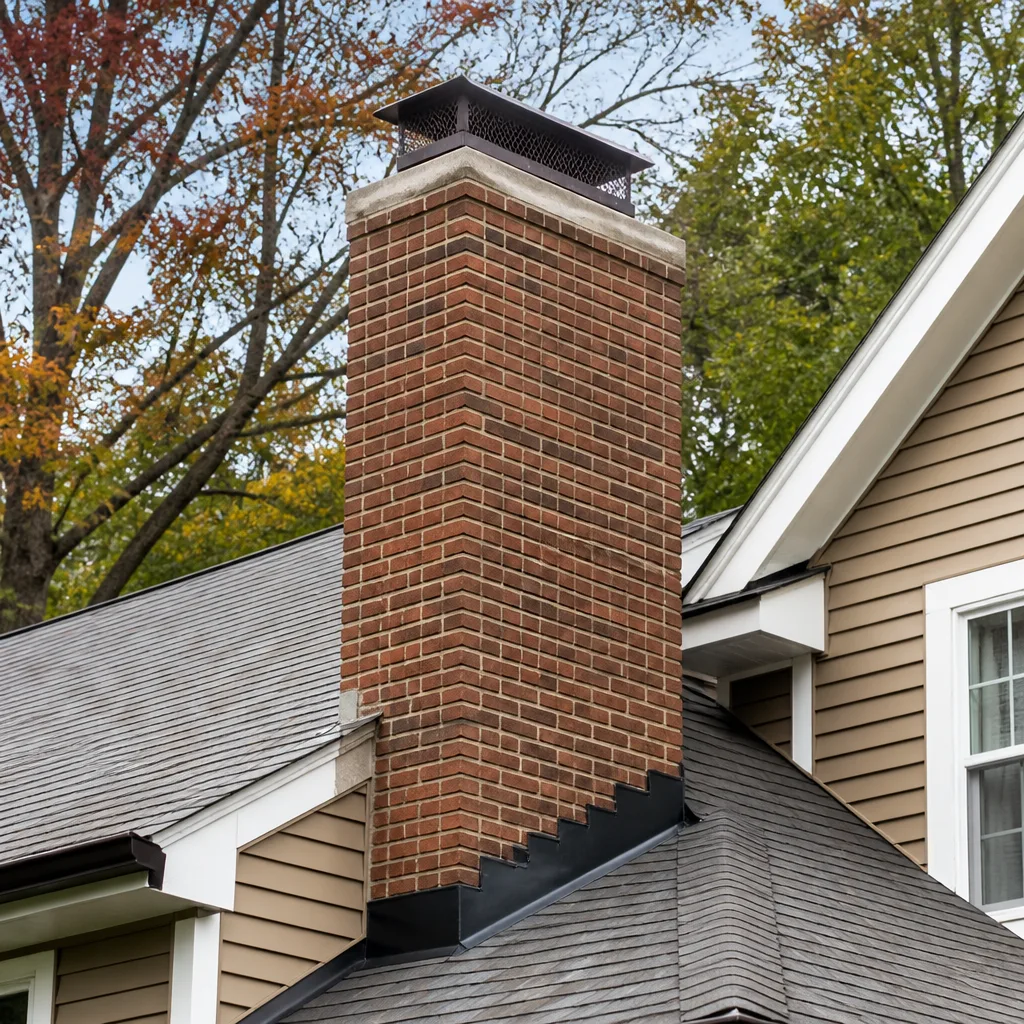
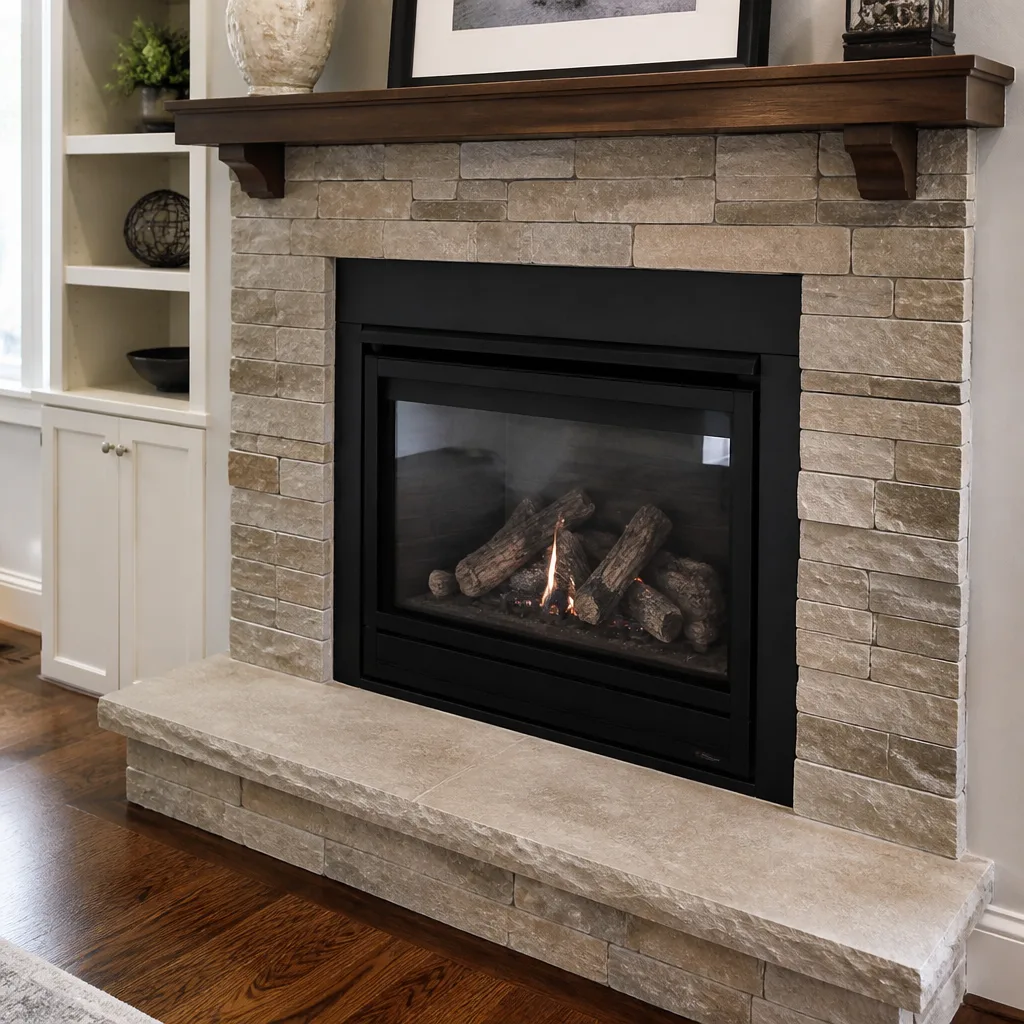
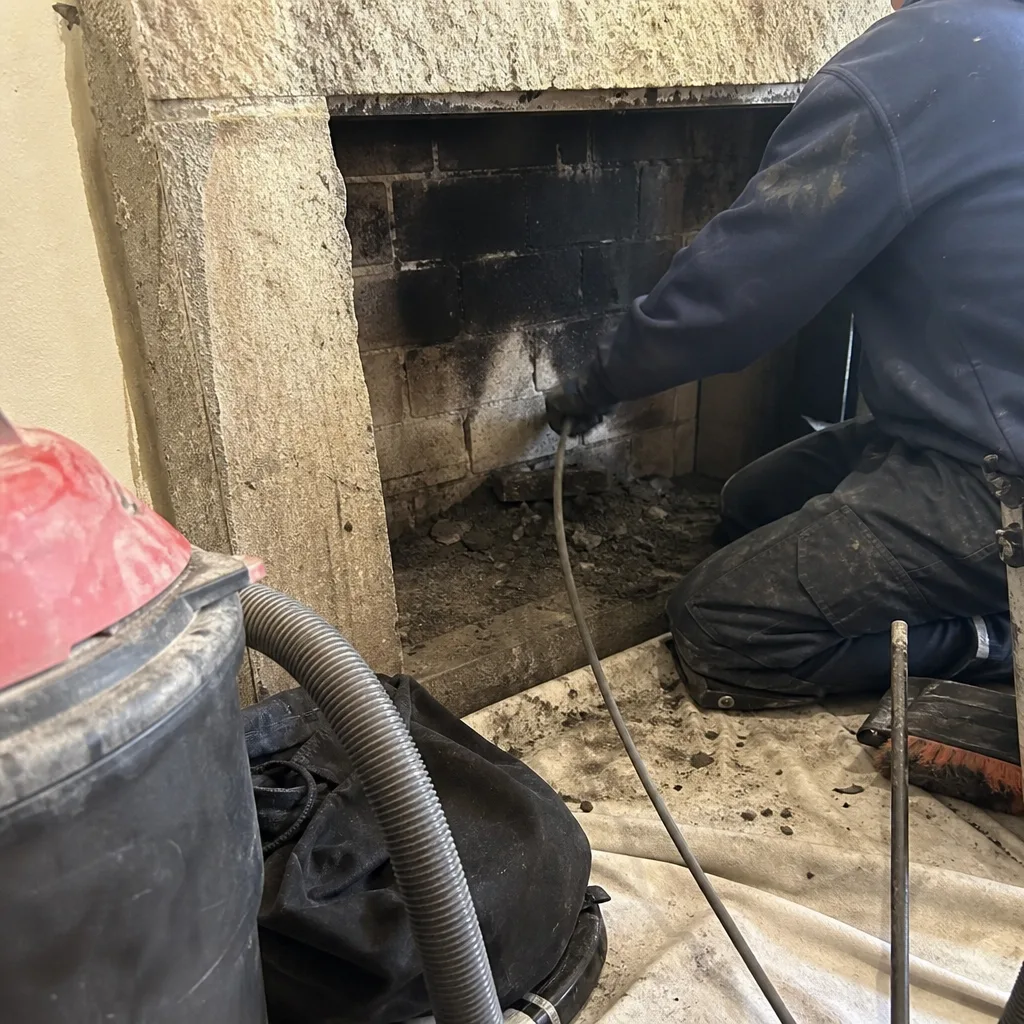 Before
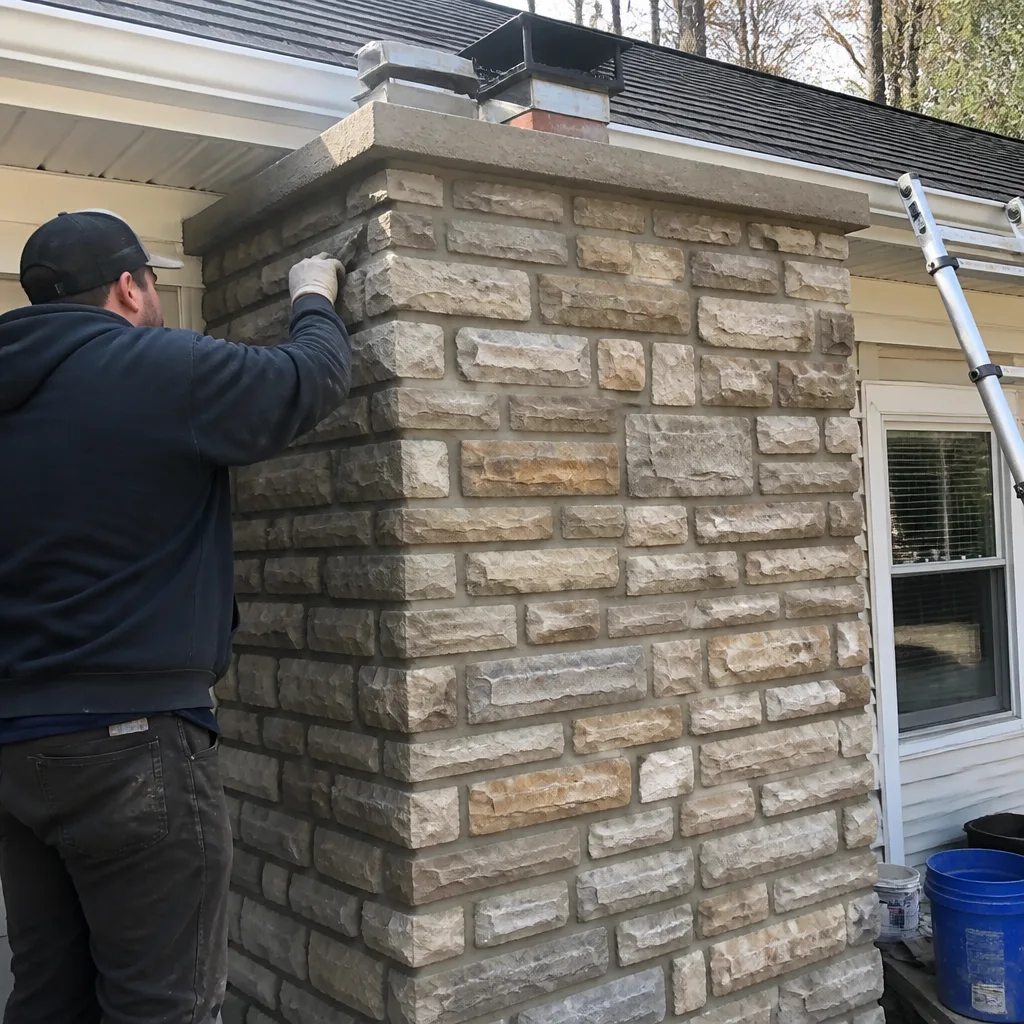 After
After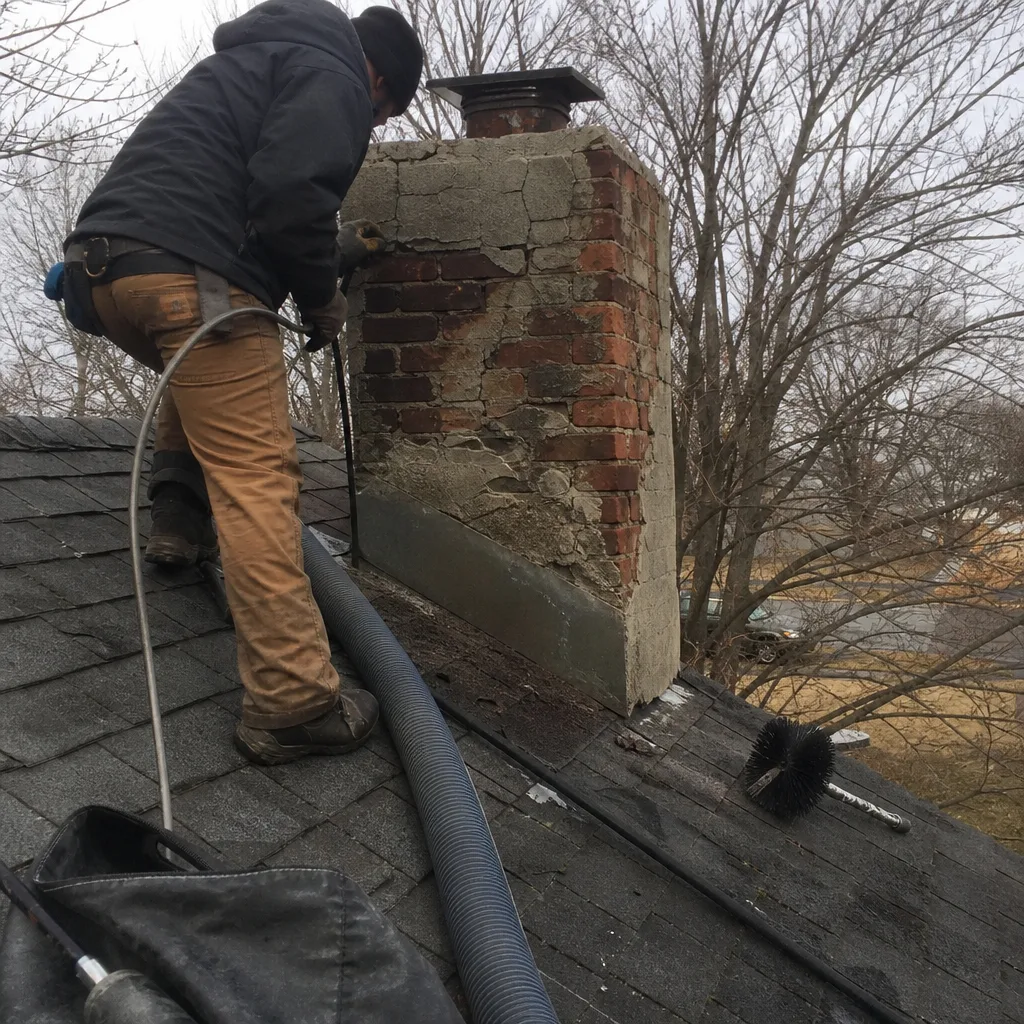 Before
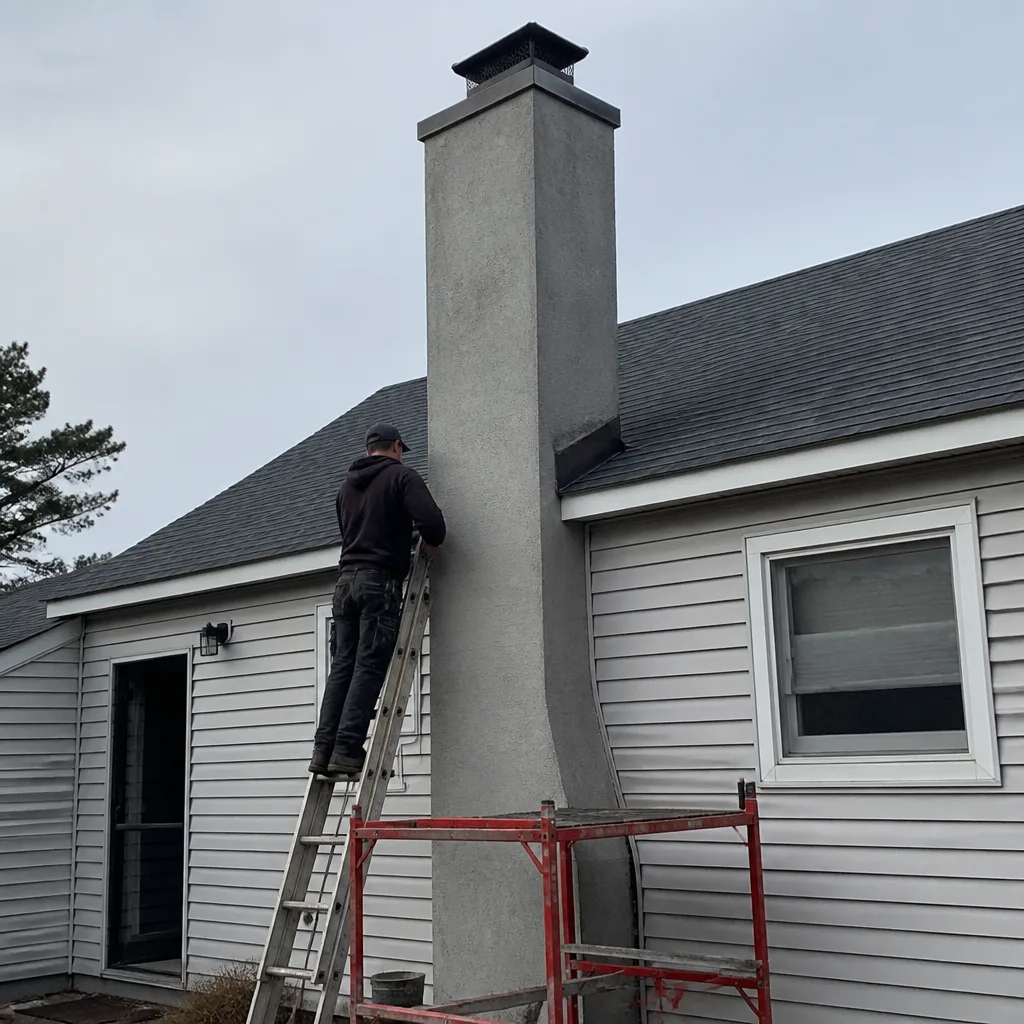 After
After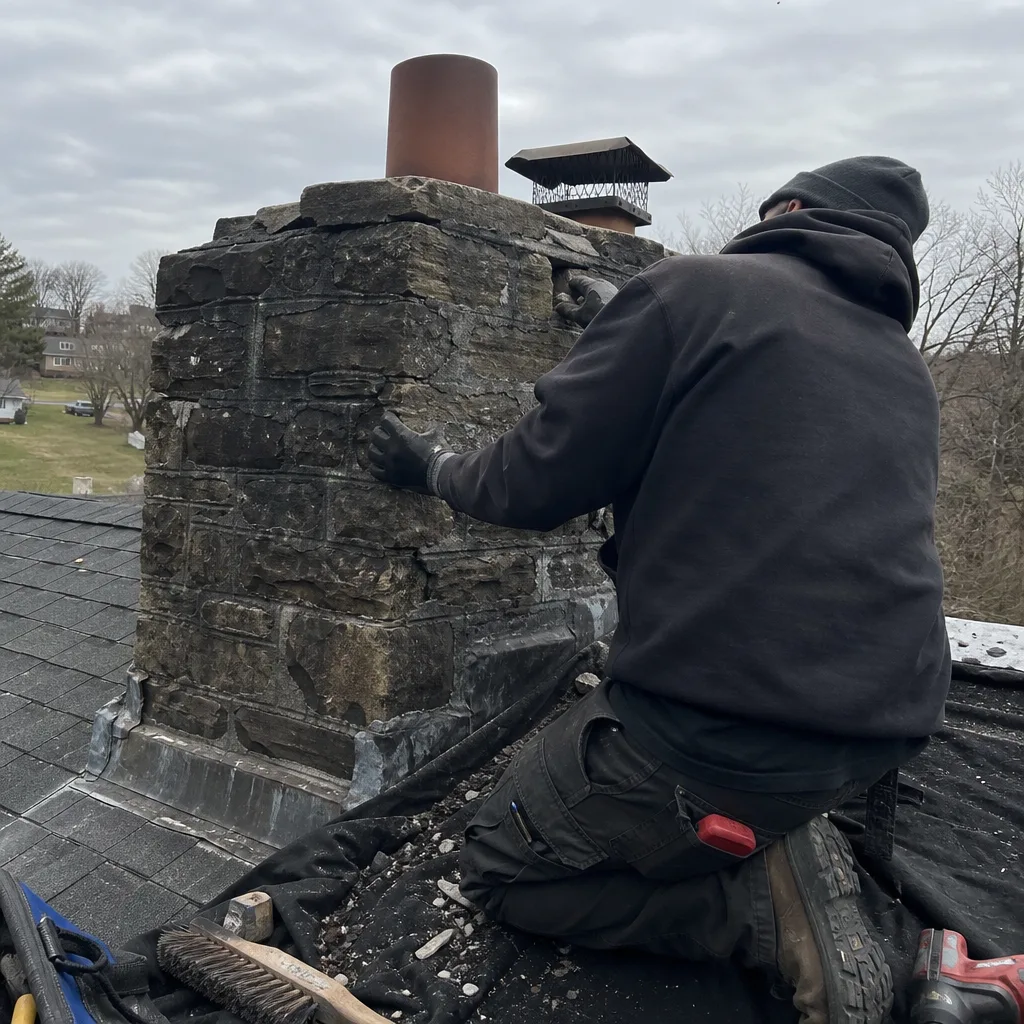 Before
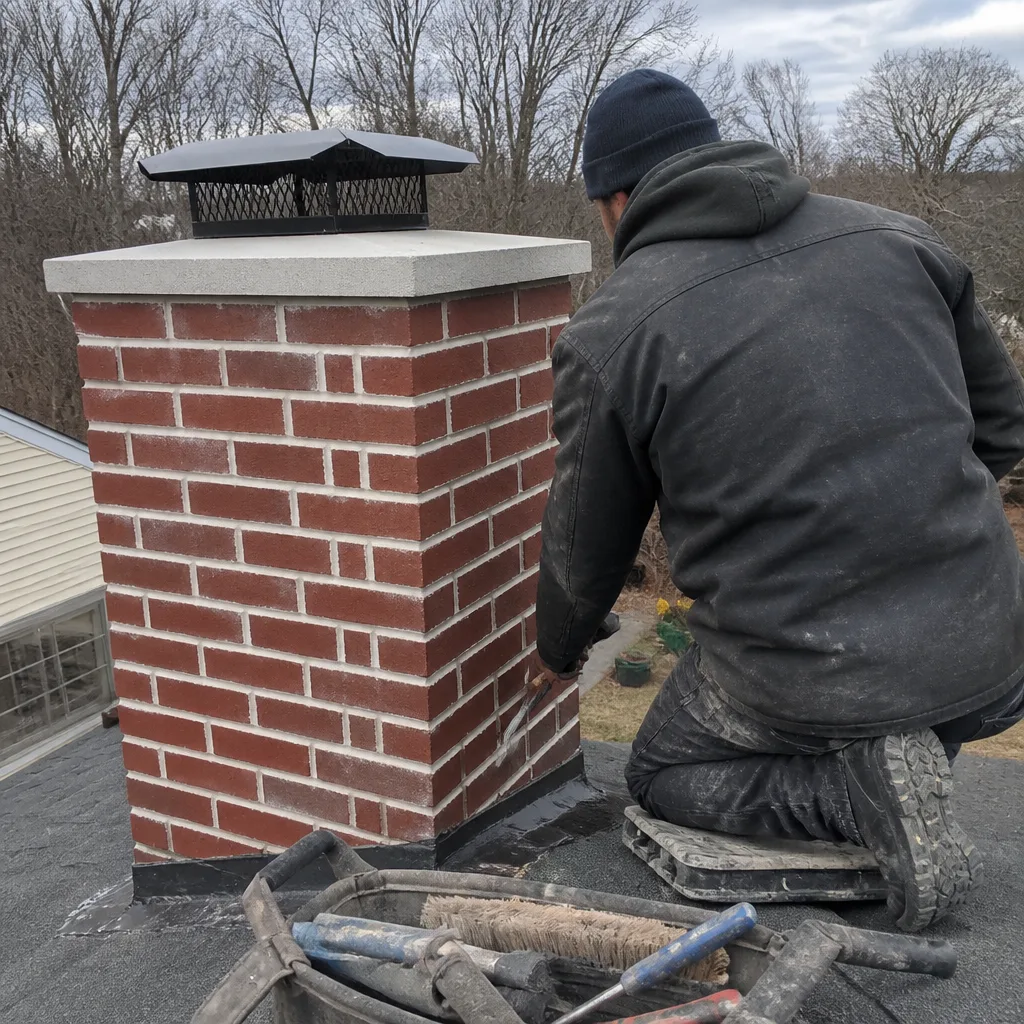 After
AfterDIY vs Professional Chimney Cleaning: The Bangor Homeowner’s Decision Guide
DIY chimney brush kits sell well and work as advertised - they move creosote. What they do not do is tell you that the Stage 2 deposit behind the smoke shelf requires chemical treatment first, or that the hairline crack in the liner two-thirds of the way up is venting combustion gases into your wall cavity. In Bangor, where winter temperatures regularly drop below 20 degrees and heating systems run hard from November through March, chimney maintenance is not a hobby. It is structural fire prevention. This guide explains when a homeowner can reasonably handle cleaning themselves, when doing so creates dangerous false confidence, and how to use both approaches intelligently. For more guides & resources on chimney care, visit our blog.
Quick Answer
Most Bangor homeowners can safely perform light DIY chimney maintenance on low-use gas fireplaces with factory liners, but wood-burning systems, aging masonry, and any chimney without a recent professional baseline inspection should be cleaned and evaluated by a certified sweep annually. The real divide is not cleaning ability - it is detection capability: only a professional camera inspection reveals hidden liner damage, creosote staging, and structural deterioration that DIY tools cannot access or assess.
Table of Contents
- What DIY Kits Actually Accomplish (and What They Cannot)
- When DIY Chimney Cleaning Is Genuinely Reasonable
- When DIY Cleaning Is Actively Dangerous
- The Insurance and Liability Dimension
- Real Cost Comparison: DIY vs Professional in Bangor
- How to Use DIY Maintenance Between Professional Visits
- What Professionals Do That DIY Cannot Replicate
- Common Mistakes to Avoid
What DIY Kits Actually Accomplish (and What They Cannot)
A standard homeowner chimney brush kit - typically a polypropylene or wire brush head, 4-6 flexible rods, and a basic ash shovel - performs one function: mechanical dislodging of loose soot and flaky creosote from the flue walls. For a wood-burning system that burns well-seasoned hardwood, produces minimal smoke, and was professionally cleaned within the past 12 months, this is not worthless. It is incomplete.
Here is what the brush actually touches: the vertical flue walls it can reach. Here is what it does not touch, see, or evaluate:
- The smoke shelf and damper throat, where sticky Stage 2 creosote accumulates and where most chimney fires originate
- The firebox walls and refractory panels for hairline cracking or spalling
- The chimney crown, cap, and flashing for water intrusion points
- The liner joints and connections, especially at offsets or transitions
- The exterior masonry for mortar deterioration, efflorescence, or structural settlement
- The combustion chamber and heat exchanger on factory-built units
The brush also cannot stage the creosote it encounters. Creosote exists in three stages: Stage 1 is dusty soot that brushes away easily. Stage 2 is tar-like and requires specialized solvents or mechanical removal. Stage 3 is glazed, hardened, and essentially flammable varnish. A homeowner running a brush through a flue feels resistance decrease and assumes the job is done. A professional sweep measures deposit thickness, identifies staging, and selects removal methods accordingly. In our experience across Bangor and the Slate Belt, we have opened flues where the homeowner had “cleaned” annually for five years without ever addressing Stage 2 buildup that had reduced the flue diameter by nearly 30 percent. See our How to Hire a Chimney Cleaning Contractor in Bangor: A Step-by-Step Guide to ensure you’re choosing qualified help.
The detection gap is the critical failure. Consumer equipment has no camera, no light source capable of illuminating a 25-foot masonry flue, and no training protocol for interpreting what limited visibility exists. The chimney cleaning and sweep process we perform includes a Level-1 or Level-2 inspection as standard - not as an upsell, but as the actual purpose of the visit.
When DIY Chimney Cleaning Is Genuinely Reasonable
There are specific, narrow conditions where DIY maintenance is a reasonable tool rather than a false substitute. We do not dismiss these out of hand. Honest craftsmanship means telling the truth about when a homeowner does not need us yet.
Condition 1: Low-use gas-log fireplaces with factory-installed liners.
Direct-vent or B-vent gas fireplaces burning clean natural gas produce minimal particulate matter. If the unit was installed by a licensed professional, the liner is intact, and annual use is under 40 hours per season, a homeowner can reasonably inspect the glass, vacuum loose debris, and verify pilot and thermocouple function. The chimney in this scenario is primarily a vent, not a combustion chamber. The risks are lower because the fuel is controlled and the temperatures are moderate.
Condition 2: Systems with a recent professional baseline and documented clean bill of health.
If a Level-2 inspection within the past 12 months found sound liner, no creosote accumulation beyond Stage 1, no masonry deterioration, and no operational issues, a homeowner can perform mid-season brush maintenance as a supplement. The key word is supplement. The professional inspection established the condition baseline; DIY maintains it between documented evaluations.
Condition 3: Outdoor boiler or detached accessory structures with metal flue pipe.
Some Bangor properties, particularly in the more rural stretches toward Upper Mount Bethel and Washington Township, use outdoor wood boilers with straight vertical metal flue. These are simpler systems mechanically, and if the homeowner has verified clearances to combustibles and the pipe is accessible without roof work, seasonal brushing is within capability. The same caveat applies: a professional should establish baseline condition first.
What DIY should never attempt:
- Roof access for cap or crown inspection - falls from second-story roofs are a leading cause of homeowner injury during maintenance attempts
- Chemical treatment of Stage 2 or 3 creosote - improper application can create noxious fumes or accelerate deterioration
- Smoke chamber parging or firebox refractory repair - these are structural, not cosmetic, and improper materials create fire hazards
- Liner installation or modification of any kind - this affects insurance coverage and code compliance directly
When DIY Cleaning Is Actively Dangerous
Certain chimney conditions transform DIY cleaning from incomplete to hazardous. These are not theoretical risks. We have documented each scenario in Bangor-area homes over our 42 years of service.
Aging masonry with no known liner condition.
Bangor’s housing stock includes significant pre-1950 construction, particularly in the historic district and surrounding neighborhoods like Roseto and East Bangor. These chimneys were often built without clay tile liners, or with liners that have deteriorated over decades of thermal cycling. A brush pushed through a compromised flue can dislodge fractured liner sections, create blockages, or mask the underlying damage by depositing soot over cracks that a camera would reveal. The homeowner finishes the job feeling accomplished while combustion gases seep through mortar joints into wall cavities.
Any system burning more than two cords of wood per season.
Heavy use produces creosote faster, and heavy use in Bangor’s climate means extended burn seasons. The physics are straightforward: cooler exterior chimney temperatures (common in our northern Pennsylvania winters) produce more condensate, which accelerates creosote formation. A homeowner brushing a heavy-use flue encounters resistance, applies more force, and either fails to remove the actual hazard or damages the flue in the attempt.
Post-chimney-fire or suspected fire event.
Chimney fires often go undetected by homeowners. The signs - sudden loud drafting noise, dense smoke, or a roaring sound - may be brief and dismissed. The aftermath includes thermal shock damage to liners, cracked crowns, and compromised mortar. DIY cleaning after such an event is dangerous because the structural integrity is unknown and the homeowner has no training in post-fire assessment protocols.
Systems with prior water intrusion.
Bangor receives approximately 47 inches of precipitation annually, with significant freeze-thaw cycling. Water-damaged flues present spalling liner tiles, deteriorated mortar, and rusted damper assemblies. A brush in this environment removes protective material, exposes fresh surfaces to accelerated corrosion, and can lodge debris in damaged sections.
Factory-built fireplaces past 15 years of age.
Metal factory-built units have finite service lives. Refractory panels crack. Metal fatigue occurs at weld points. The UL listing assumes specific maintenance protocols that DIY cleaning does not satisfy. We use fireplace services protocols that include factory-specified inspection points that no consumer kit addresses.
The Insurance and Liability Dimension
This is the point competitors rarely address honestly, and it matters deeply to homeowners who have paid premiums for decades and expect coverage when they need it.
Homeowner’s insurance policies contain standard language requiring “reasonable maintenance” of heating systems and structural components. What constitutes reasonable maintenance is interpreted at claim time, not at policy purchase. A chimney fire that originates in a flue with no documented professional inspection within the policy’s specified period - typically 12-24 months - creates coverage disputes that homeowners lose.
The specific documentation that protects you includes:
- Date-stamped inspection report with sweep certification number
- Photographic evidence of flue condition, liner integrity, and clearance measurements
- Written verdict on creosote staging and recommended cleaning frequency
- Notation of any deficiencies and whether they were corrected
DIY cleaning produces none of this. A homeowner’s log of “brushed chimney October 15” carries no weight with an adjuster evaluating whether the loss was caused by maintenance neglect. We have worked with Bangor-area homeowners post-loss who discovered this gap too late. The professional inspection is not merely maintenance - it is documentation that satisfies policy conditions.
Some insurers now explicitly require professional chimney inspection for wood-burning systems, particularly in higher-risk postal codes. The chimney repair and inspection documentation we provide meets or exceeds all major carrier requirements. The cost of annual professional service is trivial compared to the deductible on a fire claim, let alone the uncovered portion of a denied claim.
Real Cost Comparison: DIY vs Professional in Bangor
Honest cost analysis requires looking beyond the single-transaction price to the full ownership cost over time. Here is the actual math for a Bangor homeowner with a standard masonry wood-burning fireplace.
DIY Initial Investment:
- Quality brush and rod kit (proper length for typical two-story Bangor home): $85-$140
- Drop cloths, protective gear, and basic cleaning tools: $45-$75
- Shop vacuum with HEPA filtration (standard vacuums expel fine particulate): $120-$200
- Creosote removal solvent for Stage 2 deposits: $35-$55
- Extension ladder for roof access (if attempting cap inspection): $200-$350
- First-year DIY total: $485-$820
Annual Professional Service:
- Level-1 cleaning and inspection in Bangor market: $175-$250
- Level-2 camera inspection (recommended every 3-5 years, or at property transfer): $275-$375
- Documentation package for insurance and resale: included
The DIY kit pays for itself in approximately 2-3 years only if nothing goes wrong and if the cleaning performed is equivalent. It is not equivalent. The professional service includes detection, staging assessment, and documentation that the DIY approach cannot replicate. Over a 10-year ownership period, the homeowner who alternates professional and DIY service - using DIY only for mid-season maintenance between documented professional baselines - spends approximately $2,100-$2,800 total. The homeowner who attempts full DIY replacement spends the kit cost plus the likely professional remediation when hidden damage is finally discovered, typically at crisis point.
Our Hearthstone Chimney Co. home page lists current seasonal offerings, including the $89 Seasonal Tune-Up for qualifying systems. The professional cost is not the barrier competitors suggest.
How to Use DIY Maintenance Between Professional Visits
For homeowners who want to participate actively in their chimney care - and we respect this impulse - here is how to do it intelligently, in ways that complement rather than replace professional service.
Step 1: Establish the professional baseline first.
Schedule a Level-2 inspection before beginning any DIY program. Obtain the photo documentation, understand the specific condition of your system, and know what “normal” looks like for your flue. This is your reference point.
Step 2: Maintain a written log.
Record dates of fires, wood types burned, estimated burn hours, and any observations: unusual smoke patterns, draft changes, odors. This log makes your annual professional visit more efficient and more valuable.
Step 3: Perform visible, accessible maintenance only.
Clean the firebox of ash (when fully cool, stored in metal container away from structure). Inspect visible refractory panels for cracking. Verify damper operation. Check exterior for obvious crown or cap damage from ground level with binoculars. These are safe, useful tasks.
Step 4: Photograph everything.
Before and after photos of visible areas, dated and stored. These become part of your maintenance record and help the professional identify changes year over year.
Step 5: Know the stop points.
If you encounter resistance beyond normal brush friction, visible damage, or anything that does not match your baseline documentation, stop. The $175 professional visit you schedule early is cheaper than the emergency call you force by proceeding.
Step 6: Schedule annual professional service regardless of DIY efforts.
No exceptions. The DIY maintenance reduces the cleaning burden; it does not replace the inspection function.
What Professionals Do That DIY Cannot Replicate
The equipment gap is substantial and growing. Professional chimney sweeps in 2026 use tools and techniques that consumer markets do not replicate at any price point.
Camera inspection systems. We deploy high-resolution video scopes with articulating heads, powerful LED lighting, and measurement capabilities that document liner condition to the millimeter. A homeowner cannot buy this capability; the entry-level professional system exceeds $8,000, and interpretation requires training in NFPA 211 standards and manufacturer specifications.
Creosote staging and chemical treatment. Professional-grade solvents and mechanical removal tools address Stage 2 and 3 deposits safely. We use products from Copperfield and Famco that are not available in retail channels, applied with ventilation and personal protective protocols that protect both technician and occupant.
Structural assessment training. A professional sweep evaluates clearance to combustibles, proper construction techniques, and code compliance against IRC and local amendments. Bangor follows the Pennsylvania Uniform Construction Code with local amendments; professional certification includes this knowledge base.
Material quality and sourcing. When repair is indicated, we specify and install professional-grade components: DuraFlex stainless steel liners for relining projects, HeatShield cerfractory sealant for smoke chamber restoration, Gelco and Olympia Chimney caps and accessories. These are not retail equivalents. They carry proper listings, warranties, and performance specifications that satisfy code and insurance requirements.
Documentation and accountability. Every Hearthstone visit concludes with photos the homeowner can see, a plain-English verdict, and written recommendations. If we perform work, it is covered by our 90-Day Done Right Promise - in writing, no arguing. This is not a marketing phrase. It is how we have operated since 1984.
Common Mistakes to Avoid
- Assuming a clean-looking firebox means a clean flue. The firebox is visible and gets attention; the flue above it accumulates the actual hazard. We have found flues 40 percent obstructed in homes with spotless fireboxes.
- Using a brush that is wrong for the flue material. Wire brushes on stainless steel liners cause scoring that accelerates corrosion. Poly brushes on heavy creosote glaze without solvent pretreatment simply polish the deposit.
- Neglecting the smoke shelf and damper throat. These areas collect the most tenacious creosote and are the most common ignition points. Consumer rods rarely navigate the transition properly.
- Cleaning from the top down without proper roof safety equipment. Bangor’s older homes often have steep pitches and slate or metal roofing. Falls during DIY chimney maintenance are preventable by not attempting roof access without fall protection.
- Burning unseasoned wood and assuming annual brushing compensates. Green wood produces creosote at 3-4 times the rate of properly seasoned hardwood. No amount of brushing keeps pace with this production rate.
- Ignoring the exterior. Water is the enemy of chimney longevity in our climate. A homeowner focused only on interior brushing misses crown cracks, flashing failures, and mortar deterioration that will destroy the structure from outside in.
- Skipping professional service after a DIY attempt. False confidence is the most dangerous outcome of DIY cleaning. The homeowner believes the system is maintained; the undetected hazard continues developing.
When to Call a Professional
Call before you need to. The specific triggers include: any system without a professional baseline inspection within 12 months; visible cracking, spalling, or deterioration anywhere in the system; changes in draft performance, smoke spillage, or odor; after any suspected chimney fire event; before purchasing or selling a home; and whenever your insurance policy requires documented inspection.
Hearthstone Chimney Co. offers free estimates in Bangor and surrounding Slate Belt communities. A live person answers every call, 24 hours a day, 7 days a week - not a voicemail, not a callback queue. Our background-checked, uniformed technicians complete most jobs in a single visit, with no-hassle upfront pricing so there are no surprises on the bill. Call (610) 609-7634 to schedule.
Frequently Asked Questions
A standard Level-1 chimney cleaning and inspection in the Bangor market typically runs $175-$250, while a Level-2 camera inspection ranges from $275-$375. Hearthstone offers an $89 Seasonal Tune-Up for qualifying systems, and we provide free estimates with no obligation. Call (610) 609-7634 for exact pricing based on your specific system.
A legitimate liner recommendation is supported by camera documentation you can see yourself, plus a plain-English explanation of the specific defect. At Hearthstone, nothing is recommended without photographic evidence, and we will tell you plainly when work can safely wait. If a sweep cannot show you the crack, gap, or deterioration they are describing, get a second opinion. We offer free second opinions on any written estimate.
The National Fire Protection Association recommends annual inspection for all chimney systems, with cleaning frequency determined by use and fuel type. In Bangor’s climate, where heating seasons run long and exterior temperatures promote creosote condensation, wood-burning systems used as primary heat sources typically need annual cleaning. Gas systems with proper draft may extend to every 2-3 years with annual inspection. The inspection determines whether cleaning is needed; the calendar does not.
Skipped maintenance leads to creosote accumulation, which increases chimney fire risk and reduces draft efficiency. Reduced draft causes smoke spillage, carbon monoxide exposure risk, and incomplete combustion. Water intrusion from uncapped or deteriorated exteriors destroys masonry from within. The cumulative result is typically not sudden catastrophic failure but progressive degradation that becomes exponentially more expensive to address. A $200 annual service prevents $3,000-$8,000 rebuild scenarios that we document regularly in deferred-maintenance homes.
Low-use gas-log fireplaces with factory-installed liners in good condition present lower risk for DIY maintenance, provided a professional has established baseline condition within the past 12 months. Tasks within reason include glass cleaning, debris vacuuming, and visual inspection of accessible components. We still recommend annual professional inspection to verify liner integrity, draft performance, and valve assembly condition. Gas systems are not zero-risk; improper venting produces carbon monoxide, and factory-built units have specific service intervals.
Many policies now explicitly require professional inspection documentation for wood-burning systems, and all policies interpret “reasonable maintenance” at claim time. DIY cleaning without professional documentation does not satisfy this requirement. After a chimney fire, an adjuster will request inspection records; absence of these records creates coverage disputes that homeowners frequently lose. The professional inspection is insurance protection, not merely maintenance. We provide documentation packages that satisfy all major carrier requirements.
The Bottom Line
DIY chimney cleaning is a reasonable supplement for specific, low-risk systems with established professional baselines. It is not a substitute for professional inspection, camera evaluation, and documented assessment. The real risk is not the brush work itself - it is the false confidence that a brushed flue is a safe flue. In Bangor’s demanding climate, with our aging housing stock and extended heating seasons, the homeowner who combines intelligent DIY maintenance with annual professional service gets both participation and protection. The homeowner who chooses DIY alone gets participation without the information that would reveal what is actually wrong. We have been serving this community for over 42 years. We plan to be here when you need us. Done right - and we stand behind it.
Written by Russell Haines, Owner at Hearthstone Chimney Co., serving Bangor since 2014.