
Last updated September 10, 2026
Level 1 sweep and inspection to the NFPA 211 annual standard - flue, crown, cap, and flashing checked and photographed
Chimney sweep logs do not sweep chimneys. They loosen some creosote - which then falls where a brush and vacuum still have to collect it.
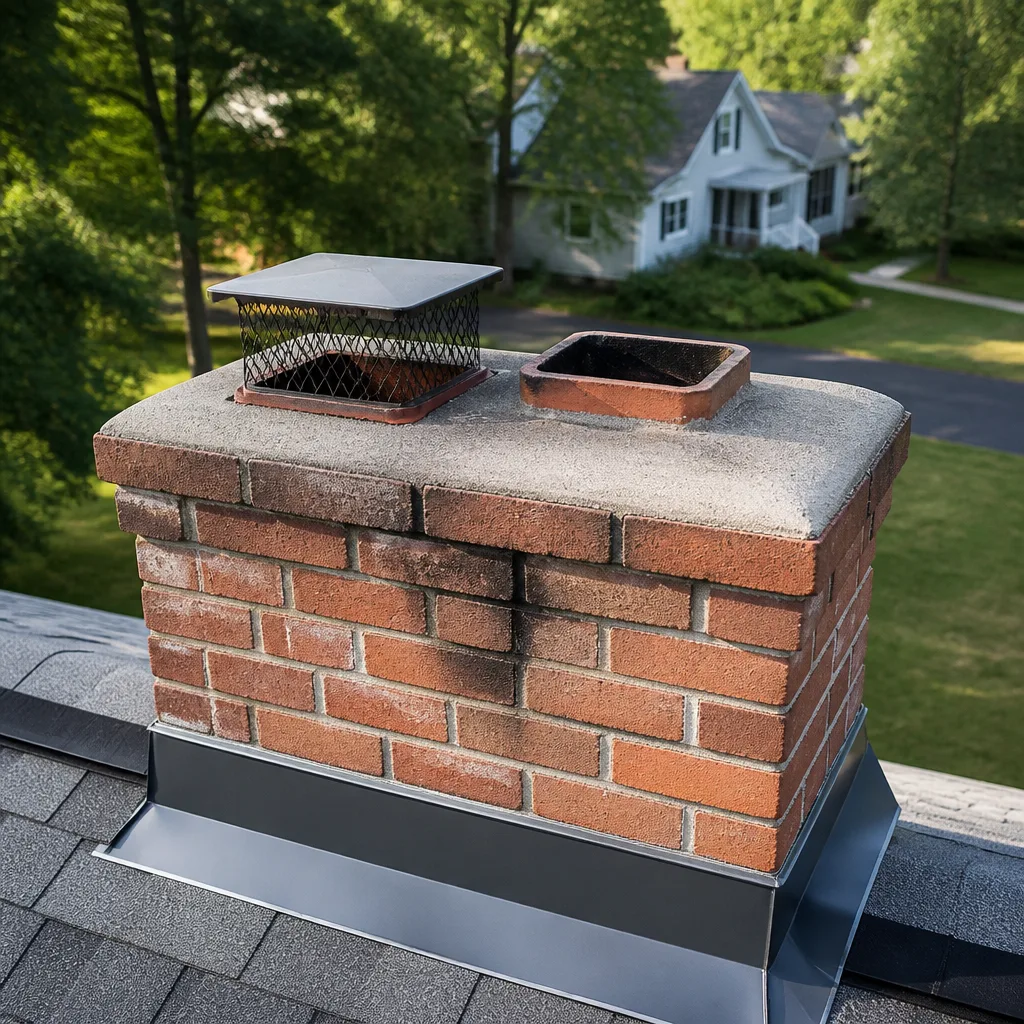
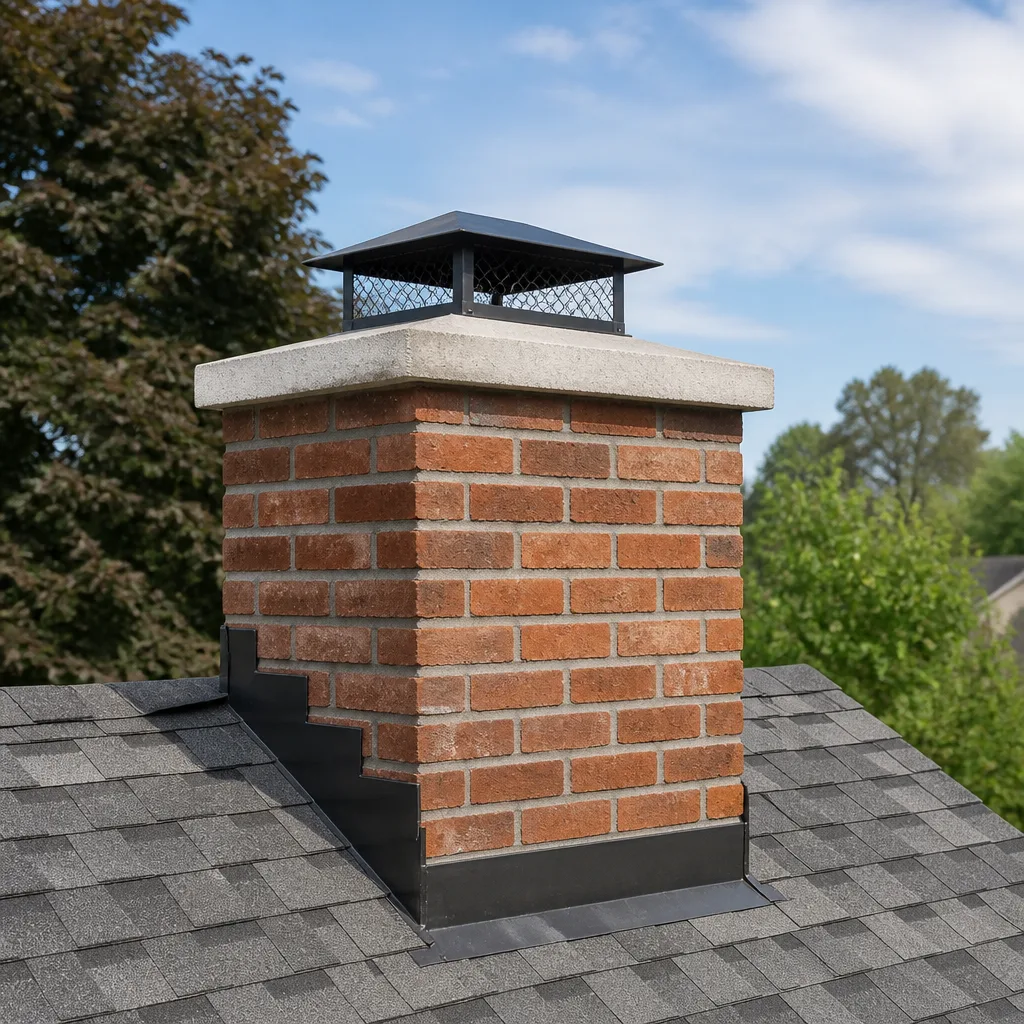
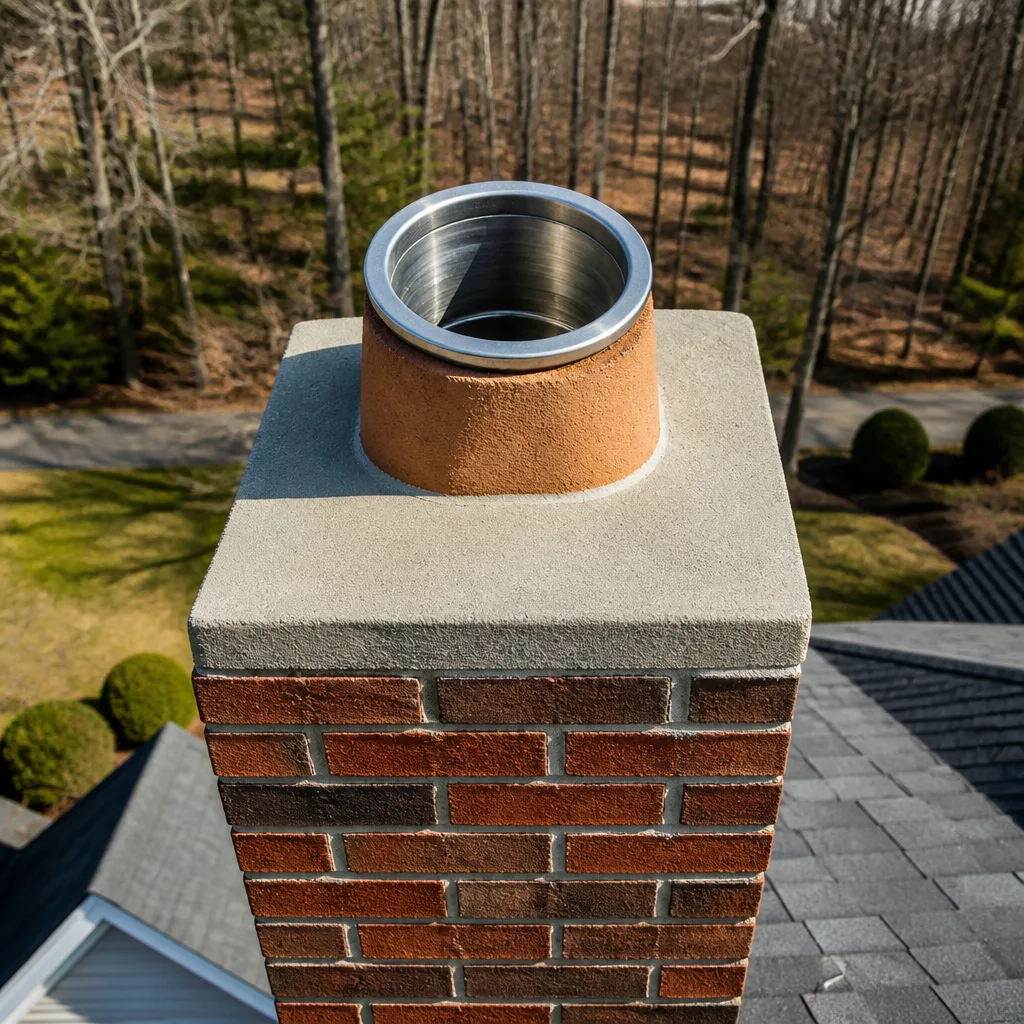
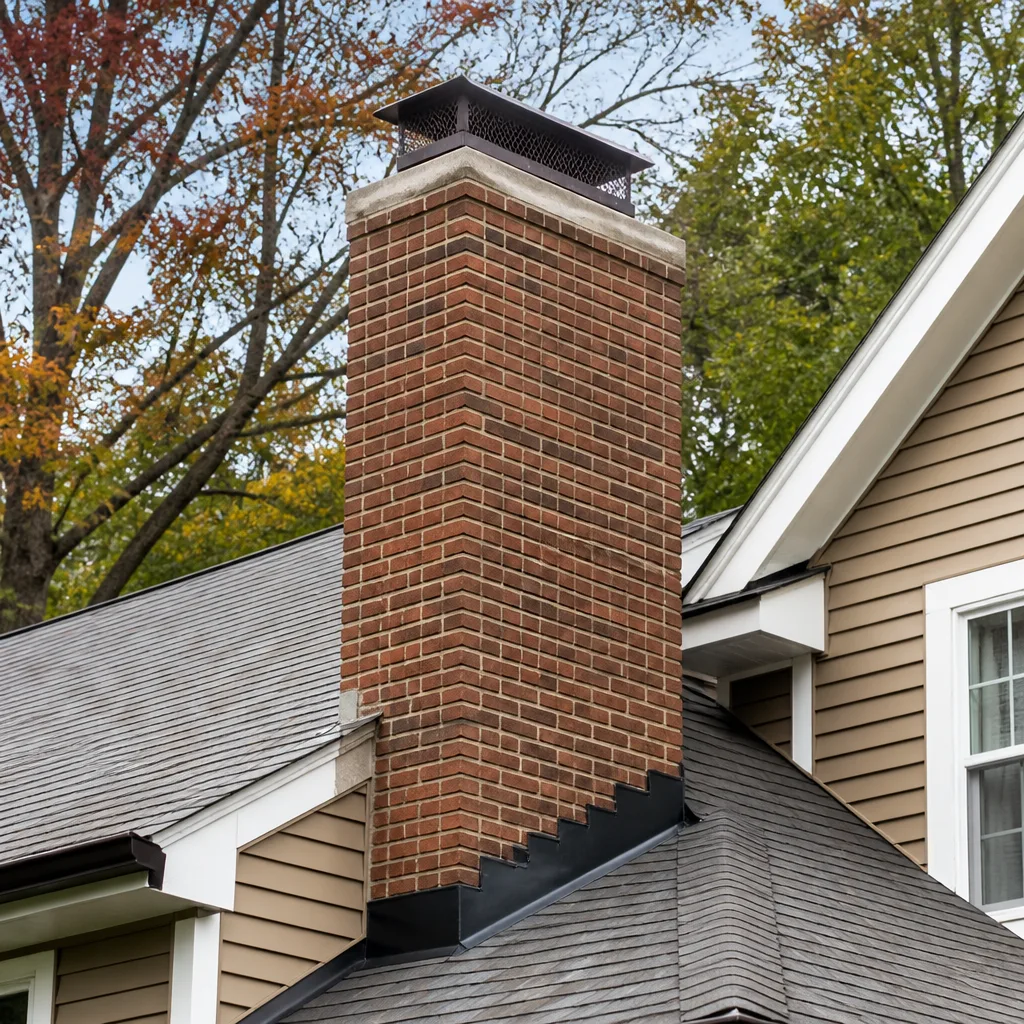
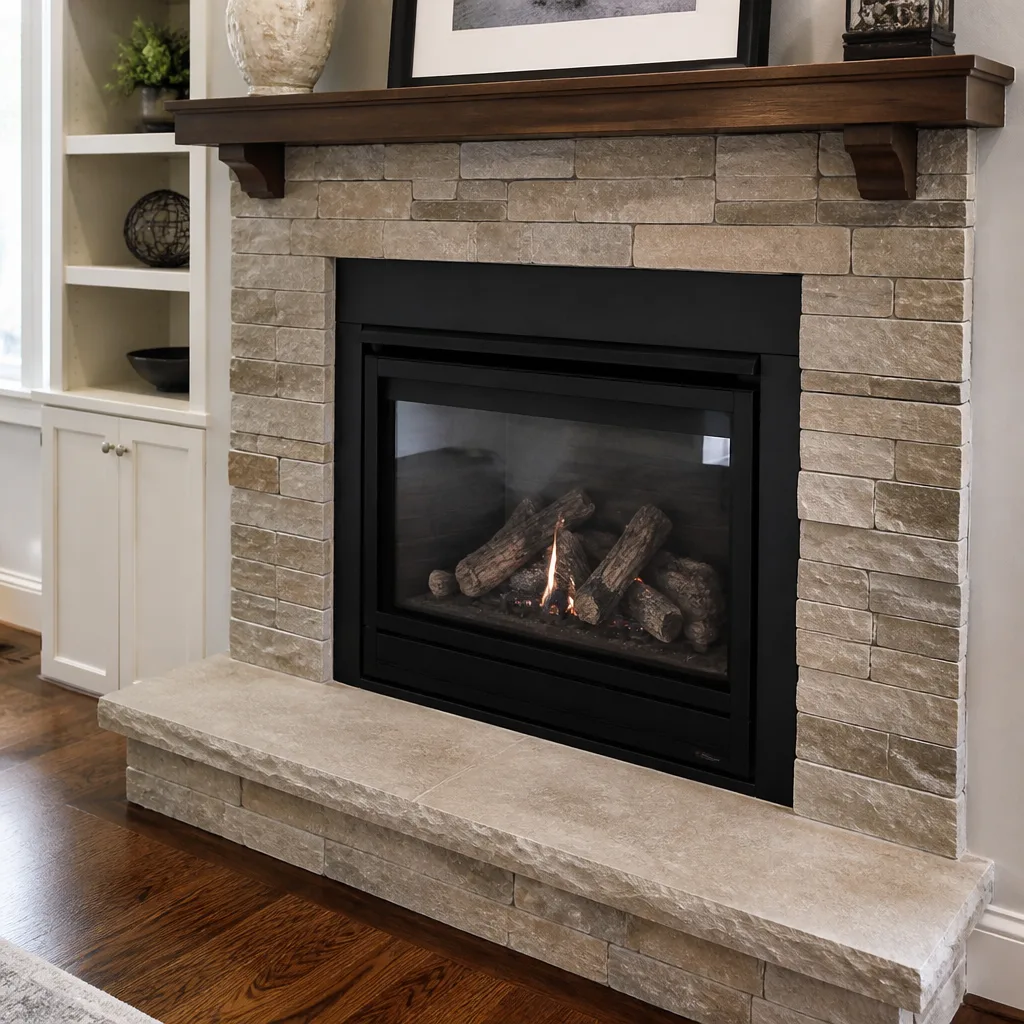
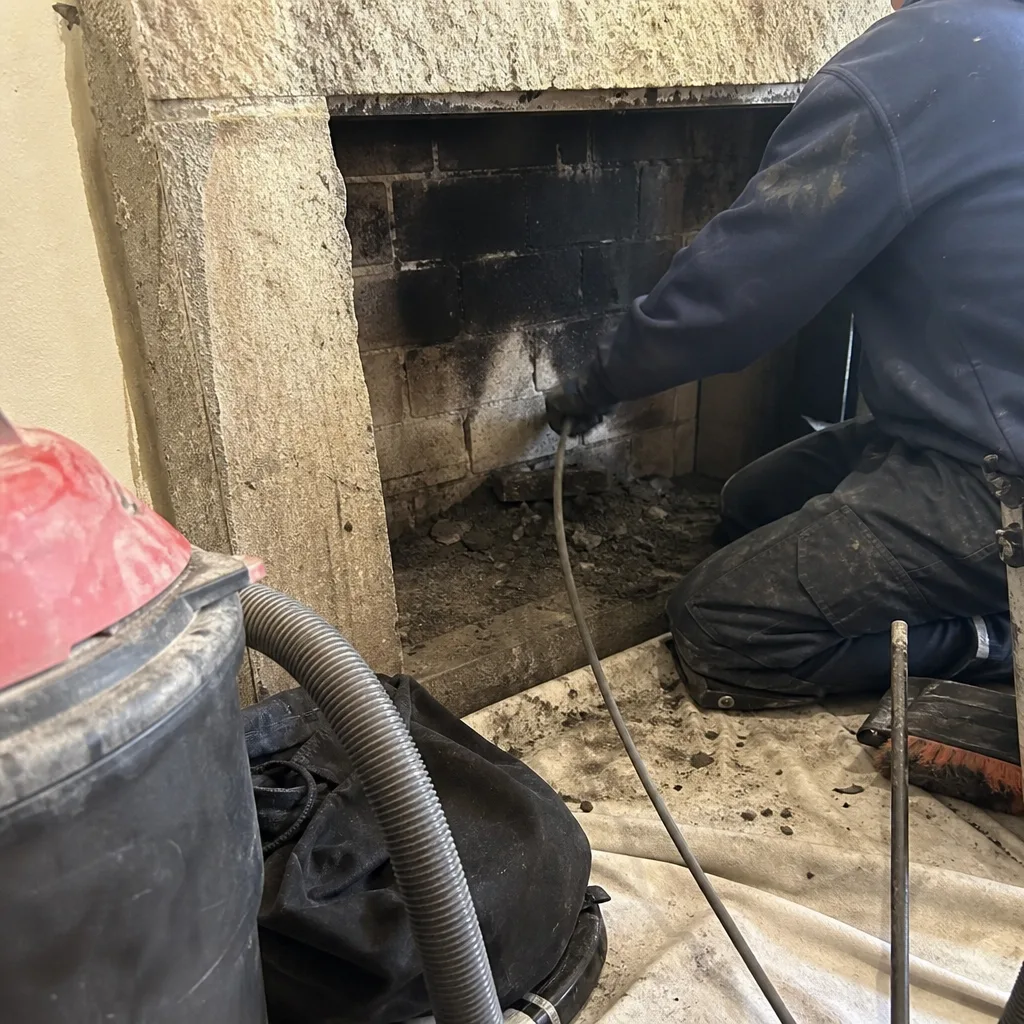 Before
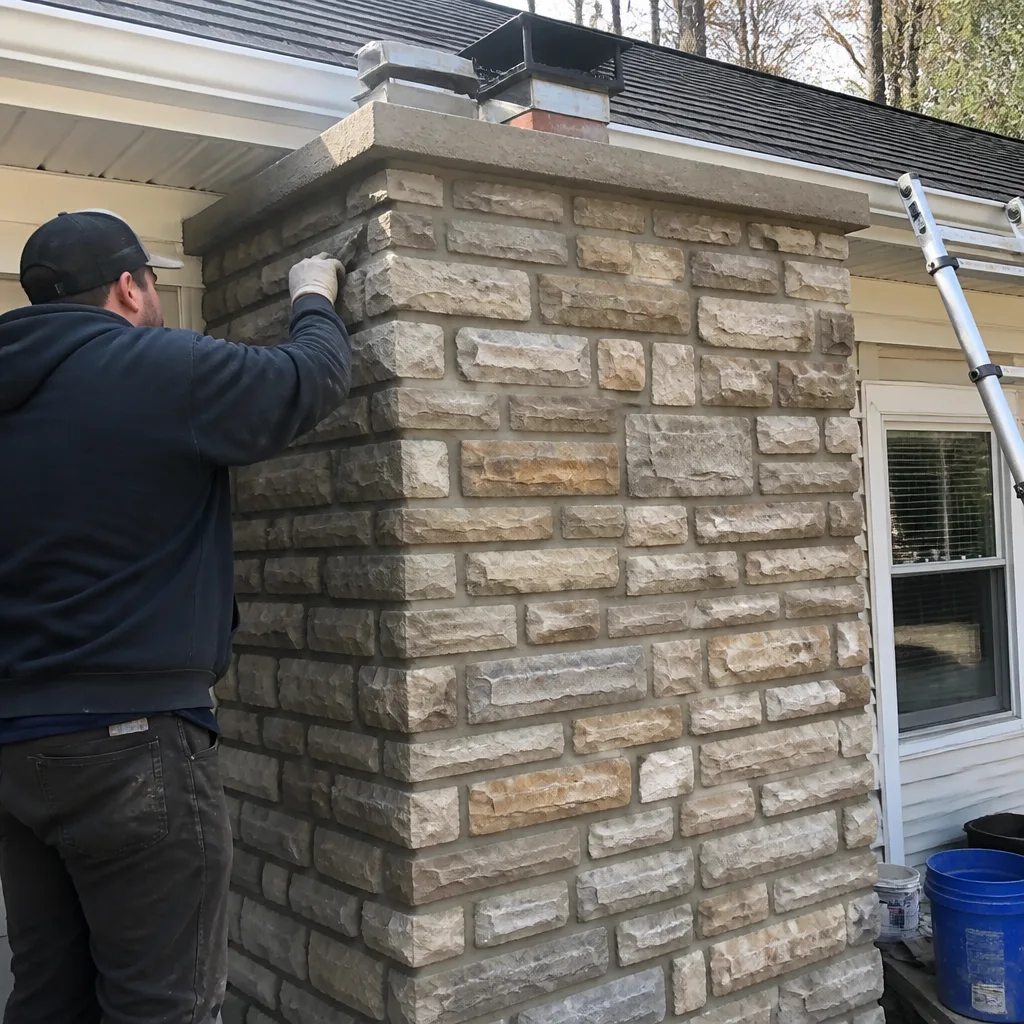 After
After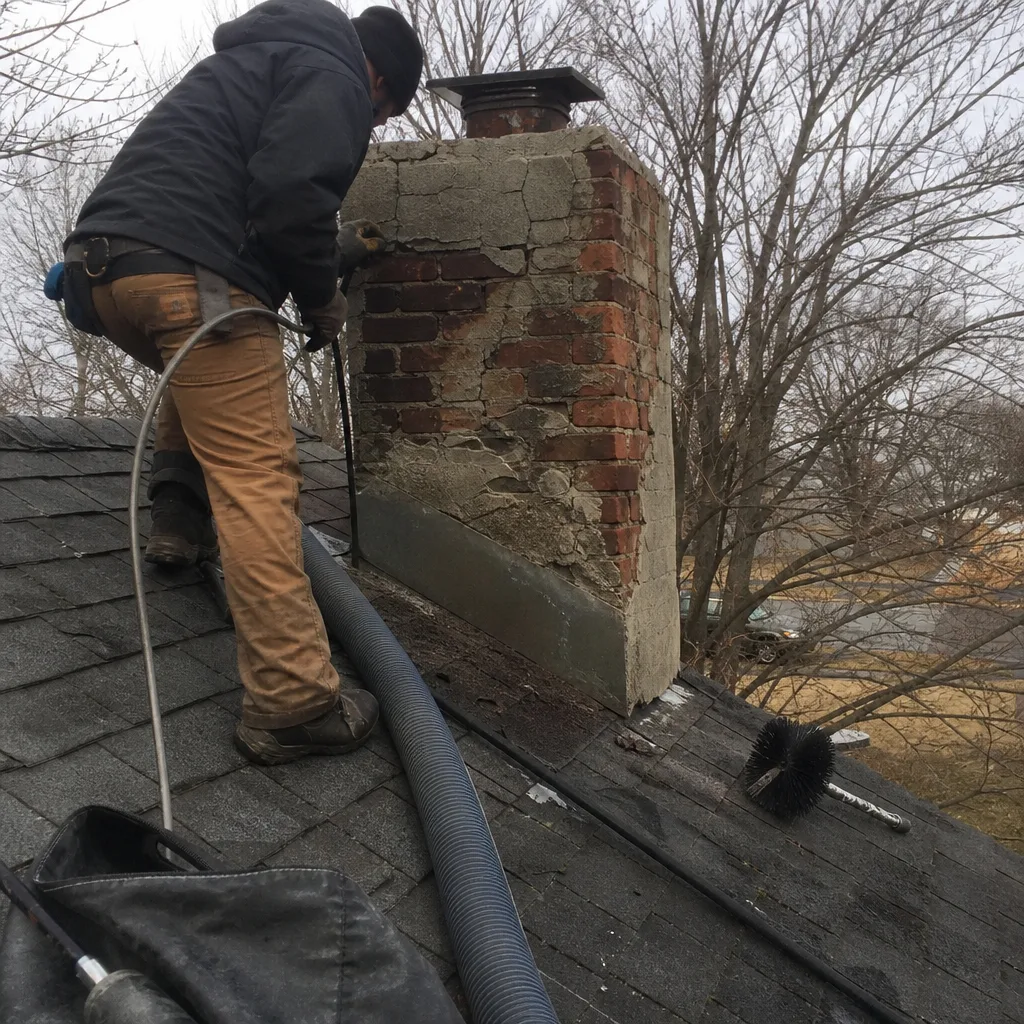 Before
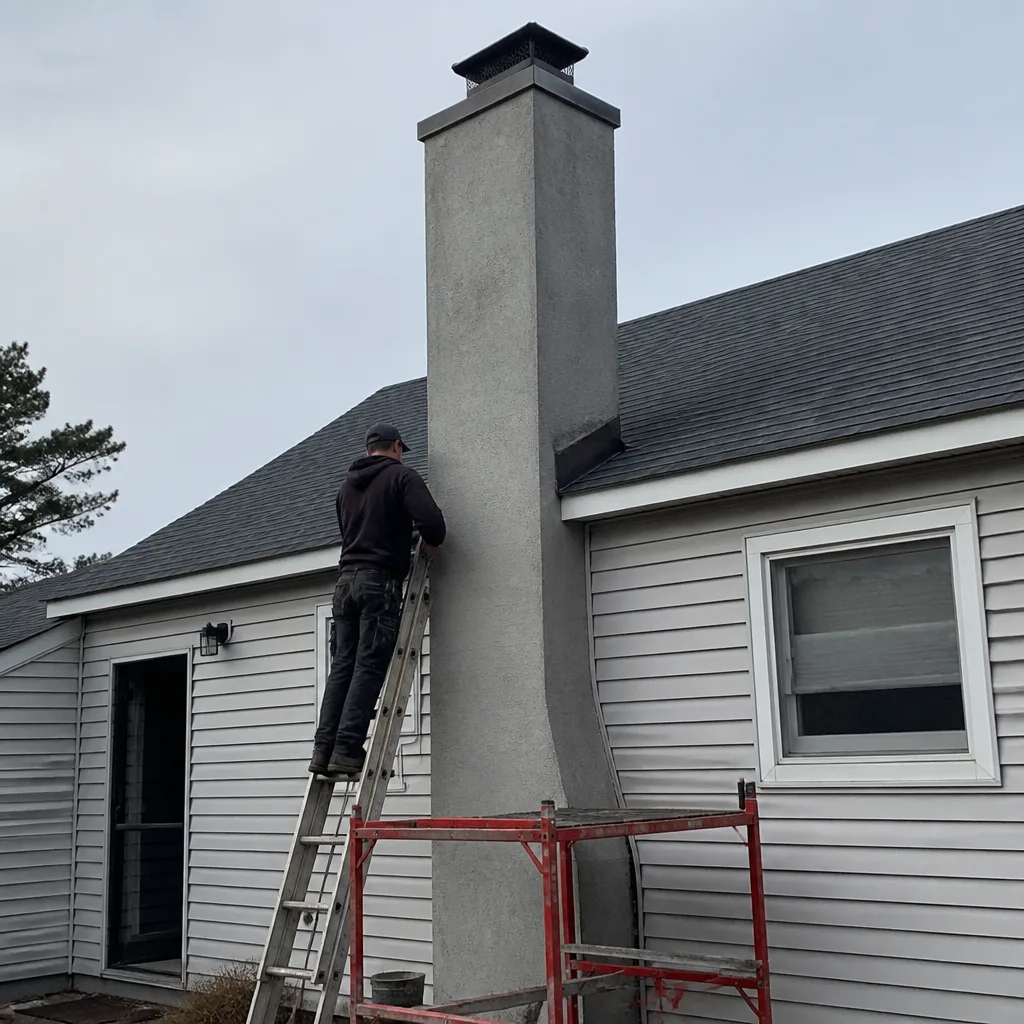 After
After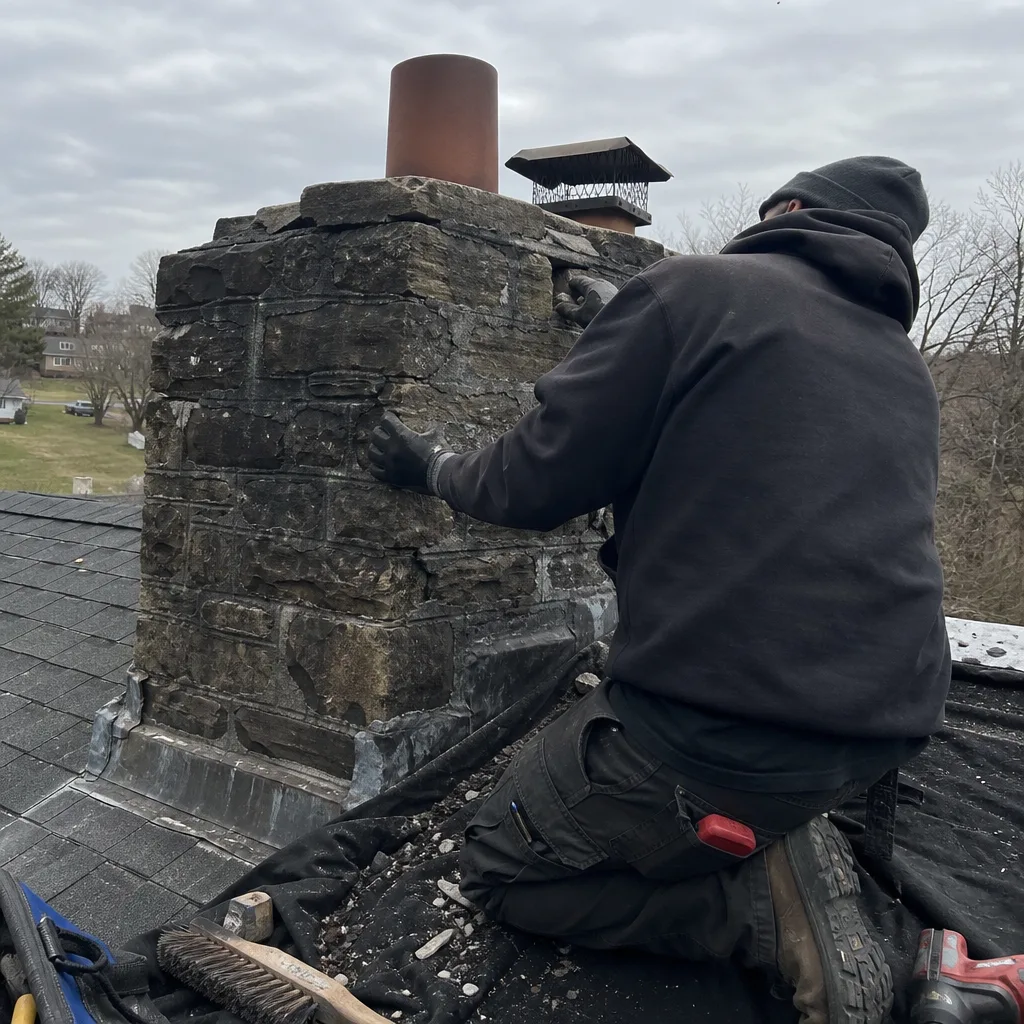 Before
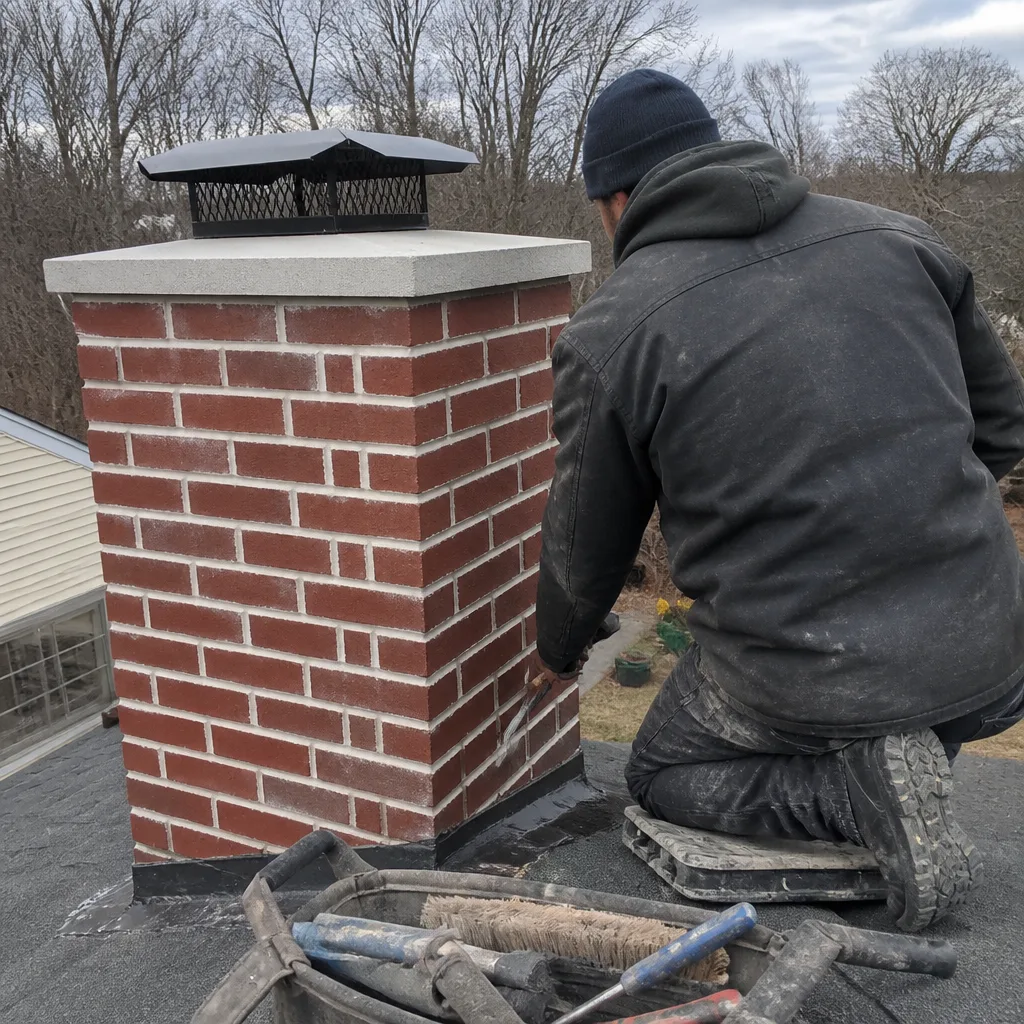 After
AfterChimney Cleaning Warning Signs: A Bangor Homeowner’s Reference Guide
A chimney fire does not always sound like a roar. Stage 1 and Stage 2 chimney fires often burn slowly and silently - the only sign may be a smell like burning rubber or an unusually hot flue pipe. Most homeowners who have had one did not know it while it was happening. In Bangor, where hard winters push heating systems hard and many homes date back to the slate-boom era of the early 1900s, chimneys work under stress that newer construction rarely faces. This guide teaches you to read the early, subtle signals your chimney sends from inside your living space - before the problem becomes visible, dangerous, or expensive. For The Complete Guide to Chimney Cleaning in Bangor and related resources, see our blog. You will learn what to notice, what it means, and how to describe it so a sweep can diagnose it fast.
Quick Answer
The most important chimney cleaning warning signs detectable inside your Bangor home are: persistent smoke odor on warm days, draft reversal when you first open the damper, visible staining above the firebox, soot accumulating on the hearth between fires, and any cracking or popping sound during heating or cooldown. These symptoms indicate creosote buildup, liner deterioration, or masonry damage that requires a Level-2 camera inspection before the next burning season. See our DIY vs Professional Chimney Cleaning: The Bangor Homeowner’s Decision Guide to weigh your options. If you notice daylight in the smoke chamber, a damper that no longer seals, or a strong petroleum or rubber odor, stop using the fireplace immediately and call for inspection.
Table of Contents
- The Seven Sensory Indicators from Inside Your Living Space
- What Your Chimney Sounds Like When Something Is Wrong
- Exterior Warning Signs You Can Spot from Ground Level
- The Four Signs That Mean Do Not Use Until Inspected
- Why Bangor Homes Face Unique Chimney Risks
- How to Document and Communicate Warning Signs to Your Sweep
- Common Mistakes to Avoid
- When to Call a Professional
- Frequently Asked Questions
The Seven Sensory Indicators from Inside Your Living Space
Most chimney problems announce themselves first where you live - not on the roof where you rarely look. These seven indicators require no tools, no ladder, and no special knowledge. They require only that you pay attention during ordinary use.
1. Draft Reversal When You First Open the Damper
You open the damper, strike a match, and smoke pushes back into the room for thirty seconds to two minutes before the flue establishes upward flow. This is not normal. A healthy chimney draws immediately because warm air rises through a clear flue. Draft reversal suggests:
- Partial blockage from creosote buildup, bird nests, or collapsed liner sections
- Negative pressure from modern weatherization (tight windows, exhaust fans running)
- Flue temperature too cold from exterior exposure, common in Bangor’s uninsulated exterior chimneys
- Improper flue sizing for the appliance
In Bangor’s older neighborhoods - think the Hill section or areas near Broadway with pre-1940 construction - exterior masonry chimneys run cold. We regularly see draft reversal on the first fire of the season in homes where the chimney has not been swept since spring. The creosote layer acts like insulation, keeping the flue colder longer. A proper sweep removes that layer and restores immediate draw.
2. Smoke Odor on Warm Days
You have not had a fire in days, but the house smells like old campfire when the temperature rises. This happens because creosote deposits are volatile. Warm air activates them. The odor travels through microscopic gaps in the masonry, through the damper that does not seal perfectly, or through the cleanout door in the basement.
This is not merely unpleasant. It indicates significant creosote accumulation, and creosote is fuel. In Bangor’s variable spring weather, when days warm to sixty degrees and nights drop below freezing, we get calls weekly from homeowners confused by sudden smoke odor. The temperature swing expands and contracts the masonry, opening pathways that were sealed in consistent cold.
3. Visible Staining Above the Firebox
Look at the masonry or metal facing directly above where flames reach. White, tan, or black staining indicates gases and moisture escaping through cracks in the flue liner or deteriorated mortar joints. White stains (efflorescence) mean moisture is moving through masonry and depositing salts. Black stains mean soot and creosote are escaping the flue path.
We document this with photos during every Level-2 inspection. Homeowners are often surprised by how far staining has progressed because they simply had not looked. In our experience, staining above the firebox correlates strongly with liner failure in Bangor homes with original clay tile liners installed before 1980.
4. Soot on the Hearth Between Fires
Clean your hearth thoroughly. If black dust reappears within a week of no use, combustion byproducts are falling down the flue. This suggests:
- Loose or dislodged creosote flakes
- Deteriorated liner surface spalling material downward
- Improper chimney cap allowing debris entry
- Animal activity (squirrels, raccoons, chimney swifts)
Bangor’s tree canopy - mature oaks and maples throughout the borough - makes animal entry common. A proper cap installation using professional-grade materials from Copperfield or Gelco prevents this, but many older homes still have rusted or missing caps.
5. Unusual Heat on Surrounding Walls or Mantel
Place your hand on the wall adjacent to the chimney breast after thirty minutes of fire. It should feel room temperature, perhaps slightly warm. If it is distinctly hot, heat is transferring through deteriorated masonry or a breached liner. This is a structural fire risk. Pyrolysis of nearby framing can lower wood ignition temperature over time, creating delayed fire risk even when everything appears normal.
6. Moisture or Condensation on Interior Glass or Metal
Glass doors that fog between panes, or metal trim that collects condensation during burning, indicate flue gases are not exhausting properly. The moisture in combustion is condensing before it exits because the flue is too cold, too restricted, or improperly sized. This accelerates creosote formation and corrodes metal components.
7. Changed Flame Appearance or Behavior
A healthy wood fire burns bright yellow and orange with active flames. If your fire burns sluggish, produces excessive smoke, or requires constant tending to stay lit, the chimney is not providing adequate oxygen exchange. This is often the first sign homeowners notice, though they rarely connect it to chimney condition.
What Your Chimney Sounds Like When Something Is Wrong
Chimneys make noise. Learning to distinguish normal sounds from dangerous ones requires no equipment, only attention to timing, location, and character.
Normal Settling Sounds
Brick and mortar expand slightly when heated and contract when cooled. In Bangor’s older homes, this produces faint ticking or creaking during the first twenty minutes of heating and again during cooldown. These sounds are:
- Regular and rhythmic, like a slow clock
- Located throughout the masonry mass, not isolated
- Consistent from fire to fire
- Present since you moved in, or gradually developing over years
These are not concerning. They are the sound of materials doing their job under thermal stress.
Thermal Expansion Sounds
Metal components - dampers, flue liners, fireplace inserts - expand faster than masonry and can produce sharper pings or clicks. These are:
- Shorter in duration than settling sounds
- Higher in pitch
- Associated with specific components you can identify
- Often worse in systems with retrofit inserts not properly integrated with original masonry
We hear these frequently in Bangor homes where homeowners installed inserts in the 1980s and 1990s without proper flue adaptation. The metal liner expands against the clay tile, producing distinctive sharp notes. Annoying, but not dangerous if the installation was otherwise correct.
Dangerous Sounds: Cracking, Popping, or Thudding
These require immediate attention:
- Sharp cracks or pops during active burning - often indicate moisture trapped in masonry flashing to steam, or liner tiles cracking under heat stress. In either case, the flue’s integrity is compromised.
- Dull thuds or falling sounds - suggest liner sections, mortar chunks, or creosote deposits detaching and falling. We have removed ten-pound creosote sections from Bangor chimneys where the homeowner heard “something falling” weeks before calling.
- Rumbling or roaring with visible vibration - this is an active chimney fire. Call 911, then evacuate. Do not attempt to extinguish.
- Sudden new sounds in a previously quiet system - any sound that represents change warrants investigation. Stable systems sound consistent; change indicates failure.
The key diagnostic question is: When did you first notice this, and has it changed? A sound that has been identical for fifteen years is likely benign. A sound that appeared last month and is growing worse is almost certainly not.
Exterior Warning Signs You Can Spot from Ground Level
You do not need to climb. Binoculars and a systematic observation from the ground reveal most exterior problems before they become interior emergencies.
Efflorescence Patterns
White, powdery deposits on brick indicate water moving through masonry and depositing soluble salts. The pattern matters:
- Scattered spotting near the top - cap or crown deterioration, allowing water entry at the most vulnerable point
- Vertical streaking - mortar joint failure creating channels for water migration
- Broad, blotchy areas mid-chimney - saturated masonry from prolonged exposure, often combined with failed flashing
Bangor’s freeze-thaw cycle is brutal on masonry. Water enters in liquid form, expands nine percent when frozen, and fractures mortar and brick. We see the worst efflorescence on north-facing chimneys that never fully dry between weather events.
Spalling Sequences
Spalling - the flaking or popping of brick faces - progresses predictably:
- Surface roughness, like sandpaper texture on brick faces
- Small chips at edges and corners
- Larger flakes revealing the softer interior body of the brick
- Complete loss of brick face, leaving recessed, eroded surfaces
Once Stage 3 begins, replacement is necessary. The brick has lost its protective fired skin and will deteriorate rapidly. In Bangor’s Slate Belt neighborhoods, we see accelerated spalling in chimneys built with local soft shale-based brick common in pre-1920 construction. These bricks were never intended for exterior exposure without proper caps and crowns.
Cap and Crown Deterioration
From the ground, assess:
- Concrete crown - should have visible slope away from the flue opening, no cracks wider than hairline, no pooling or vegetation
- Metal cap - should cover all flue tiles with proper clearance, show no rust streaks on masonry below, and sit level
- Flashing - the metal joint where chimney meets roof should show no gaps, no lifted edges, no caulk failure
A rust streak running down masonry from cap level indicates metal failure that will soon allow water directly into the flue. We install replacement caps using DuraFlex and HeatShield components where the original design was inadequate.
Mortar Joint Condition
Sound mortar is slightly recessed, uniform in color, and shows no crumbling. Failed joints are washed out (recessed far below brick face), powdery to the touch if reachable, or missing entirely. The “tuckpointing needed” threshold is when joints are recessed more than half an inch or when water can penetrate to the interior.
The Four Signs That Mean Do Not Use Until Inspected
Some warning signs indicate active hazard. Continuing to use the fireplace risks fire, carbon monoxide exposure, or structural damage. If you observe any of the following, stop using the system and call for inspection.
1. Visible Daylight in the Smoke Chamber
The smoke chamber is the area above the damper and below the flue liner. You should see only masonry or properly parged surfaces. If light from outdoors is visible through cracks, gaps, or missing mortar, the barrier between flue gases and structural framing is compromised. This is a direct path for fire or carbon monoxide to reach wall cavities.
In Bangor’s balloon-framed homes - common in construction from 1880 to 1930 - wall cavities extend from basement to attic without firestopping. A breach in the smoke chamber connects directly to this vertical channel. We have documented smoke chamber failures that created visible soot streaks in second-floor closets, with the homeowner unaware of the connection.
2. Damper That No Longer Seals
A damper should close tightly enough to prevent significant air movement. Test on a windy day: hold a lit incense stick or thin ribbon near the closed damper. Movement indicates leakage. Beyond energy loss, a failed damper cannot be opened reliably for emergency ventilation if a chimney fire occurs. It also allows creosote odor and moisture entry during off-seasons.
3. Strong Petroleum or Rubber Odor
Wood fires should smell like wood. A chemical, petroleum, or hot-rubber odor indicates:
- Creosote approaching ignition temperature (Stage 1 chimney fire)
- Foreign material in the flue (plastic, rubber, roofing tar from prior repairs)
- Improperly cured paint or sealant on metal components
- Gas leak if you have a gas log or starter
Any of these require immediate cessation of use. The petroleum odor specifically indicates pyrolysis - chemical decomposition at high temperature - which precedes visible flame by minutes or hours.
4. Visible Black Staining on Exterior Masonry
Black stains on the outside of the chimney indicate flue gases are escaping through masonry breaches. Unlike the white or tan staining discussed earlier, black means active soot deposition. The flue is not containing combustion byproducts. This is often accompanied by reduced draft and increased smoke odor inside.
We see this pattern in Bangor when liner failure occurs in the upper flue, above the roofline. Gases exit through cracked tiles or missing mortar, deposit soot on exterior masonry, and often go unnoticed because homeowners do not routinely inspect their roofline. Binoculars reveal what casual observation misses.
Why Bangor Homes Face Unique Chimney Risks
Bangor’s built environment creates chimney conditions that differ from newer, more uniform housing markets. Understanding these factors helps interpret warning signs accurately.
Age and Construction Variety
Bangor’s housing stock spans from Federal-era stone construction through Victorian wood frame, Craftsman bungalows, mid-century ranch, and scattered modern build. Each era used different chimney designs, materials, and construction standards. A warning sign that indicates urgent failure in a 1920s unlined chimney may be normal behavior in a 1985 insulated stainless system. Context matters, and context requires local experience.
We have worked on chimneys in Bangor built with local slate, local brick, imported Philadelphia pressed brick, and modern cinder block with veneer. Each behaves differently under thermal and moisture stress. The chimney repair approach that works for one destroys another.
Climate Stress
Bangor sits at elevation with exposure to northwest winter winds. Temperature swings of forty degrees in twenty-four hours are common in shoulder seasons. This thermal shock accelerates:
- Mortar deterioration from freeze-thaw cycling
- Crown cracking from expansion-contraction
- Flue liner failure from differential thermal movement between steel, clay, and masonry
- Flash seal failure from repeated movement at the roof-chimney joint
The Lehigh Valley’s position between the Pocono plateau and the coastal plain creates weather patterns more severe than either region alone. Bangor chimneys experience this directly.
Fuel and Burning Patterns
Many Bangor homeowners burn wood as primary or significant supplementary heat. Extended burning seasons - October through April is common - mean more creosote accumulation per year than occasional decorative use. The warning sign thresholds that apply to weekend fireplace users do not apply to those heating with wood. More use means more frequent inspection and cleaning.
Local Code and Permit Context
Chimney work in Bangor falls under Northampton County building code, with permits required for liner replacement, structural repair, and new installation. Historical properties in the borough’s central district may have additional review requirements. We handle permit submission as part of our standard process - the homeowner does not navigate this alone.
How to Document and Communicate Warning Signs to Your Sweep
Clear communication before the technician arrives reduces diagnostic time, focuses the inspection, and often reduces cost. Here is how to prepare.
What to Photograph
- Interior staining - take photos in natural light, include surrounding area for scale, note when you first observed it
- Hearth soot accumulation - photo after cleaning, then photo one week later showing reaccumulation
- Damper condition - open position, closed position, any visible rust or distortion
- Exterior from multiple angles - ground level, then with binoculars if available, showing full chimney height
- Roofline detail - flashing, cap, crown, any visible gaps or deterioration
- Any debris removed - creosote chunks, mortar pieces, animal nesting material; place next to ruler or coin for scale
How to Describe Sounds
Use this framework:
- Timing - during heating, at peak temperature, during cooldown, or random
- Location - firebox, smoke chamber, wall adjacent, attic above, basement below
- Character - ticking, creaking, popping, cracking, thudding, rumbling
- Change over time - new, worsening, seasonal, or consistent for years
- Associated conditions - high wind, specific outdoor temperature, after rain, only with certain fuel
How to Describe Odors
Be specific. “Smoky” is less useful than “like a campfire the morning after rain” or “like burning rubber on hot days.” Note:
- When it occurs (during fire, after fire, on warm days, constantly)
- Where it is strongest (firebox, basement, second floor, specific room)
- What makes it better or worse (opening windows, running HVAC, rain)
Why Pre-Inspection Briefing Matters
A technician who knows what you have observed arrives with focused attention. The inspection is faster because we know where to look first. The diagnosis is more certain because we can correlate your observations with our findings. In some cases, we can perform targeted inspection rather than full diagnostic protocol, reducing cost.
Our Level-2 camera inspections include photos you can see and a plain-English verdict. When you provide good preliminary information, those photos tell a clearer story. We have had homeowners say, “I noticed that stain six months ago but didn’t think to mention it” - and that stain turned out to be the key to a liner breach we would have otherwise spent additional time locating.
The chimney cleaning and sweep process at Hearthstone Chimney Co. begins with your observations. We add our expertise to your attention.
Common Mistakes to Avoid
- Assuming a chimney that “draws fine” is clean. Draft and cleanliness are independent. A chimney can draw adequately with dangerous creosote buildup, especially in cold weather when strong temperature differential overcomes restriction. We have cleaned chimneys in Bangor that drew well but contained glazed creosote deposits exceeding NFPA 211 limits.
- Using chimney cleaning logs as substitute for sweeping. These products may loosen light, fluffy creosote. They do not remove glazed or third-degree creosote, the most dangerous form. They also provide false confidence that delays proper maintenance. We remove the residue these products leave behind, and it is often more difficult than untreated creosote.
- Ignoring seasonal odors as “just how old chimneys smell.” Persistent smoke odor indicates active creosote volatility and potential pyrolysis risk. Old chimneys should smell like masonry, not like last winter’s fires. In Bangor’s humid summers, we get calls in August from homeowners who ignored spring odors and now face active wasp or bee infestation in flue deposits.
- Judging chimney condition by visible firebox alone. The firebox is the easiest area to inspect and the least indicative of overall condition. Most dangerous failures occur in the smoke chamber and upper flue, invisible without camera inspection. A pristine firebox can coexist with a failed liner fifteen feet above.
- Waiting for “the burning season” to schedule maintenance. Spring and summer scheduling offers flexibility, better pricing through our seasonal offers, and identification of problems before you need the system. Fall scheduling in Bangor means waiting lists, rushed work, and discovering problems when you need heat.
- Hiring based on lowest price without verifying insurance and references. Chimney work involves roof access, combustion systems, and structural modification. Uninsured contractors leave liability with the homeowner. We are fully insured and bonded, with background-checked, uniformed technicians - documentation available on request, no arguing.
- Attempting DIY repair on high-tension components. Damper springs, some cap fasteners, and liner connection hardware are under significant tension. Improper handling can cause injury or drop components down the flue. Document what you observe; leave manipulation to equipped professionals.
When to Call a Professional
Call when you observe any warning sign discussed in this guide, even if you are uncertain of its significance. Uncertainty is itself information - it means the system is behaving in ways you do not understand, and that warrants expert assessment.
Specifically: call before the burning season if you have not had a Level-2 inspection within twelve months; call immediately if you observe any of the four do-not-use signs; call if sounds, odors, or performance have changed from previous years; call if you are new to the home and have no maintenance records.
Hearthstone Chimney Co. offers free estimates in Bangor. A live person answers every call, twenty-four hours a day, seven days a week - not a voicemail, not a callback queue. Our background-checked, uniformed technicians complete most jobs in a single visit, with no-hassle upfront pricing: the number on the estimate is the number on the invoice. Every job carries our 90-Day Done Right Promise in writing. If it is not right, we make it right. No paperwork, no arguing.
Call (610) 609-7634 to schedule your inspection or to discuss warning signs you have observed. We will tell you honestly whether the situation requires immediate attention or can wait for routine scheduling. That is how we have operated for over forty-two years, and how we intend to operate for decades to come.
Frequently Asked Questions
A standard chimney sweep and Level-1 inspection in the Bangor area typically ranges from $175 to $275, depending on accessibility, flue condition, and whether animal removal or debris clearing is required. Level-2 camera inspections, which include photos you can see and a written condition report, generally range from $300 to $450. Our $89 Seasonal Tune-Up offer covers basic sweep and inspection for qualifying systems during off-peak months. Call (610) 609-7634 for an exact quote - estimates are free, and the number we quote is the number on the invoice.
Clay tile liners can last decades if properly maintained, but they deteriorate predictably: mortar between tiles erodes, tiles crack from thermal shock, and flue gases eventually reach surrounding masonry. A Level-2 camera inspection reveals actual condition. We recommend replacement when we document cracked tiles, missing mortar, or gaps visible on camera - and we show you the photos before recommending anything. Some clay tile systems in Bangor’s pre-1950 homes remain serviceable; others failed years ago and the homeowner never knew. The inspection determines which, not the age alone.
The National Fire Protection Association recommends annual inspection for all chimney systems, and cleaning when creosote buildup exceeds one-eighth inch. For Bangor homeowners who burn wood as primary heat, this typically means annual sweeping. Occasional decorative users may extend to every two to three years if inspection confirms minimal accumulation. The specific frequency depends on wood moisture content, burning efficiency, and flue design - all factors we assess during inspection. We note the recommended return date on every service record we provide.
Skipped maintenance leads to progressive creosote accumulation, which reduces flue diameter and increases fire risk. It also allows minor masonry deterioration to advance to major structural repair. In Bangor’s climate, a small crown crack left one winter becomes spalling brick and water-damaged framing by the third. The cost differential is substantial: annual maintenance averages under $250; rebuilds after failure routinely exceed $4,000. More critically, skipped maintenance creates carbon monoxide exposure risk and chimney fire potential that threatens life safety. The question is not whether maintenance is worth the cost, but whether the risk of omission is acceptable.
Mechanically able homeowners can perform basic brush sweeping on straight, accessible flues with proper equipment. However, this addresses only the flue interior and provides no assessment of liner condition, smoke chamber integrity, or exterior deterioration. It also creates significant mess and personal exposure to carcinogenic creosote without proper respiratory protection. For the systems common in Bangor - often with offset flues, multiple bends, and deteriorated original construction - professional equipment and camera inspection are necessary for safe, complete service. We do not recommend DIY for any system showing warning signs discussed in this guide.
Our standard sweep includes full flue brushing with professional-grade equipment, firebox and smoke chamber cleaning, damper inspection and adjustment, exterior visual assessment from ground level, and written condition report. Level-2 inspections add internal camera documentation with photos you receive, plain-English verdict on all components, and specific maintenance recommendations with priority ranking. All work is performed by background-checked, uniformed technicians using materials from HeatShield, DuraFlex, and other professional-grade manufacturers - no builder-grade substitutes. The 90-Day Done Right Promise covers every job in writing.
Adequate caps cover all flue openings with proper clearance, shed water away from the flue, withstand local wind exposure, and show no rust or distortion. From the ground, look for: coverage of all flue tiles (not just one of several), absence of rust streaks on masonry below, secure attachment without visible gaps, and mesh screening that prevents animal entry without clogging with debris. In Bangor’s mature-tree neighborhoods, we see frequent failure from branch impact and accumulated leaf debris. We install replacement caps using Gelco and Copperfield components with proper sizing for your specific flue configuration.
The Bottom Line
Chimney warning signs are not mysteries requiring special training to detect. They are ordinary observations - smells, sounds, stains, and performance changes - interpreted with attention and context. The skill is not recognition but response: noticing early, describing accurately, and acting before minor indicators become major failures. In Bangor’s demanding climate and varied housing stock, this attentiveness matters more than in newer, more uniform markets. Hearthstone Chimney Co. has served this community for over forty-two years. We have documented thousands of chimney conditions, and we return every finding with photos you can see and language you can understand. No surprises on the bill, no arguing if something needs correction. Done right, and we stand behind it.
Written by Russell Haines, Owner at Hearthstone Chimney Co., serving Bangor since 2014.